9 Top AutoPost Alternatives for Automated Content Generation
AutoPost users switch when credits run dry mid-campaign or output needs heavy editing. Many platforms cap monthly articles, charge per word, or publish drafts that read like filler. If your pipeline stalls every time a plan limit hits, you need a tool that keeps publishing without babysitting.
This guide covers 9 AutoPost alternatives, starting with Autoblogging.ai, plus the criteria that separate usable tools from expensive noise: pricing models, output quality, integrations, and publishing workflows. By the end, you will know which option fits your volume, budget, and editorial standards, and which one to pick first.
What to Look For in AutoPost Alternatives
Evaluating AutoPost alternatives requires moving beyond surface-level feature lists to assess how each platform handles the end-to-end content workflow, from topic discovery and AI drafting to SEO optimization and publishing. A tool can look impressive in a demo yet fall apart when you need 50 articles a month that actually rank.
The right choice depends heavily on your use case. An affiliate site owner needs different things than an agency managing client blogs or a hobbyist running a personal WordPress site. Keep that context in mind as you work through the criteria below.
Content quality and the underlying AI model sit at the top of the list. Many newer tools run on GPT-4 or comparable large language models, while older platforms may still rely on GPT-3 era technology. The difference shows up in coherence, factual grounding, and how much editing each draft needs before publishing. Ask whether the tool supports multiple LLMs, since access to Claude, Gemini, or ChatGPT alternatives gives you flexibility when one model underperforms on a topic.
SEO capabilities separate serious content creation software from basic article generators. Look for keyword integration, SERP analysis, and internal linking features. Some platforms connect with tools like Surfer SEO, Frase, MarketMuse, or Clearscope to score drafts against competing pages. Others handle optimization natively. Either approach works, but the workflow matters. If you must export every article into a separate optimizer, your content scheduling pipeline gets slower and more error-prone.
Automation level determines how hands-off the process really is. The strongest options can generate, schedule, and publish directly to WordPress through RSS feeds or API connections. That means you set a topic queue and the blog automation runs without daily input. Weaker tools stop at draft generation and leave publishing, formatting, and image insertion entirely to you.
Consider these automation checkpoints when comparing platforms:
- Direct WordPress publishing via API or plugin
- RSS feed ingestion for fresh topic ideas
- Built-in content scheduling and drip publishing
- Automatic image sourcing and featured image assignment
- Social media automation for post-generation distribution
Scalability is where pricing models diverge sharply. Some tools cap monthly article output, others sell credits that may or may not roll over, and a few throttle bulk generation behind higher tiers. If you plan to grow from 10 posts a month to 100, map out what that growth costs before committing. Credit rollover policies matter more than they seem, since unused credits that expire quietly waste money.
Language support deserves attention if you target non-English markets. Not every AI writing tool handles multilingual output with equal fluency, and some charge extra for it. Test a sample in your target language before assuming coverage.
Integrations round out the picture. Zapier connections, CMS compatibility beyond WordPress, and social media automation hooks all affect how well a tool fits your existing stack. A platform that plays nicely with Notion AI, Grammarly, or QuillBot for post-processing adds practical value.
Finally, demand pricing transparency. Watch for hidden credit costs, per-word charges, or seat limits buried in fine print. The best tool for an affiliate site chasing volume is rarely the best for an agency delivering polished client work, so match the platform to your workflow rather than chasing the longest feature list.
1. Autoblogging.ai - Best Overall
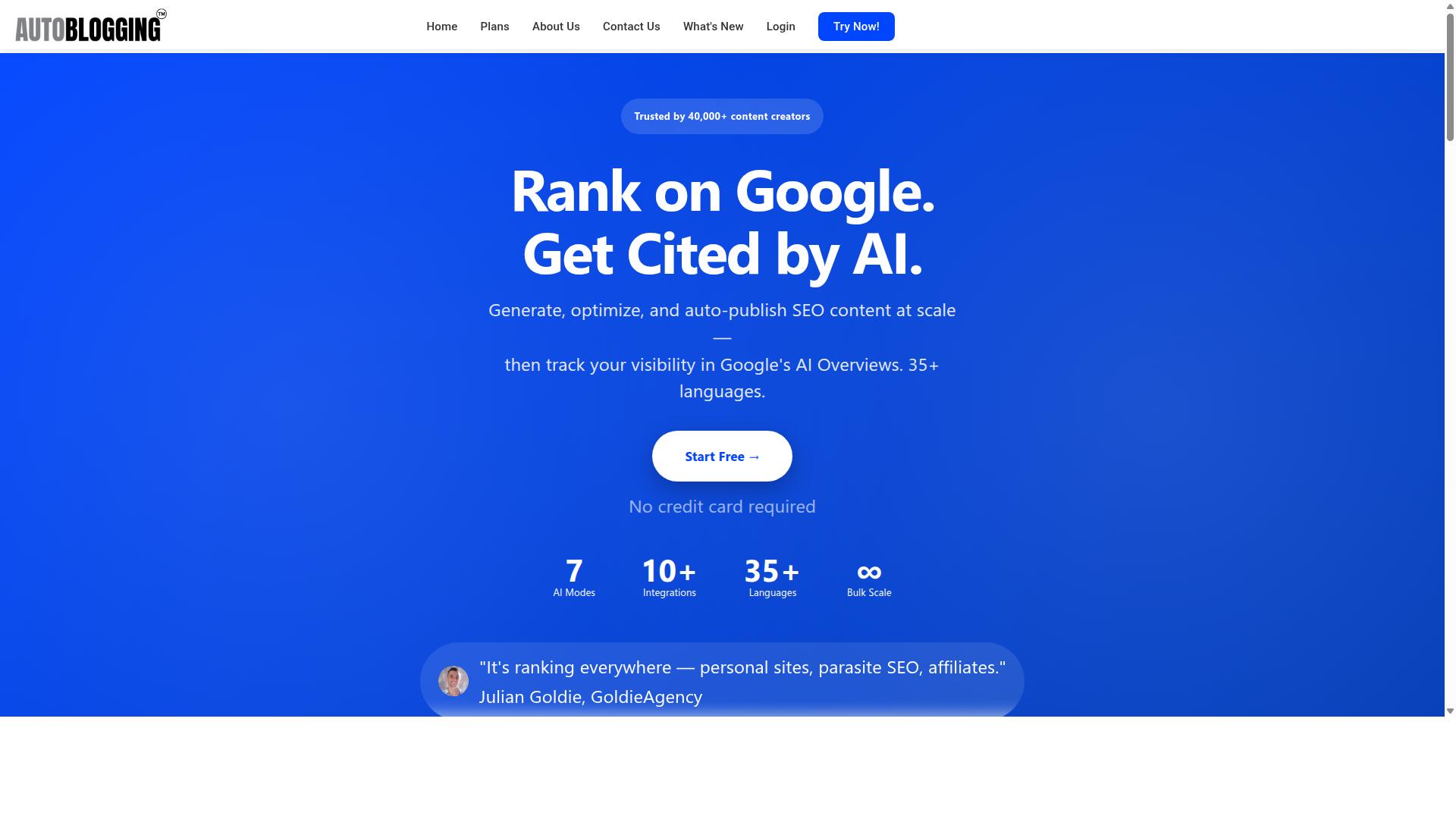
Autoblogging.ai has rapidly become a leading choice for content creators seeking a balance of advanced AI writing, SEO optimization, and workflow automation. It earns the top spot in this roundup because it pairs article generation with a full set of optimization and publishing tools, rather than stopping at text output alone.
At its core is an AI article generation platform with multiple modes. Quick Mode covers free single and wizard generation, while Godlike Mode performs SERP competitor analysis, LSI keyword extraction, and knowledge graph extraction to shape deeper content.
For scale, Bulk Generation produces up to 500 articles via CSV, and the platform supports 35+ languages. Specialized modes include News Mode with Google News integration and Amazon Reviews Mode.
Beyond writing, the toolset includes Site Optimizer, Semantic SEO Analysis with a 21-point audit, Snippet Optimizer, Topical Maps, Intense Optimizer, Fan Out Queries, AI Infographics, Outreach Prospects, and both AI and Human Proofreaders. Publishing options span WordPress with unlimited sites and scheduled auto-posting, Web 2.0 platforms, multi-platform support, API, Zapier, and n8n, plus a Content Repurposer.
That combination is why 40,000+ content creators rely on it. For anyone comparing AutoPost alternatives for automated content generation, it sets a high baseline for what an article generator can handle end to end.
Key Features, Pricing, and Who It's For
Autoblogging.ai offers a tiered pricing structure that scales from individual bloggers to large agencies, with features designed to streamline content production at every level. Monthly plans start at $19 for 40 credits and rise through Regular at $49 (120 credits), Standard at $99 (300 credits), Gold at $179 (600 credits), Premium at $249 (1,000 credits), and Enterprise at $999 (5,000 credits).
Annual billing lowers the effective monthly rate: Starter at $12/mo ($148/year), Regular at $32/mo ($382/year), Standard at $64/mo ($772/year), Gold at $116/mo ($1,396/year), Premium at $162/mo ($1,942/year), and Enterprise at $649/mo ($7,792/year). Credits roll over on all plans, and new accounts get 10 free credits per month with no credit card required. Additional credits can be purchased separately.
Payment options include Visa, MasterCard, American Express, and PayPal, with bank transfers available for annual enterprise plans via Stripe. You can cancel anytime, and Done For You packages are offered for teams that prefer a hands-off route.
The feature set covers the workflow from research to publishing:
- Godlike Mode for in-depth SERP analysis, LSI keywords, and knowledge graph extraction
- Bulk Generation of up to 500 articles via CSV
- 35+ integrations, including WordPress, Web 2.0 platforms, Shopify, Wix, Webflow, Blogger, Ghost, API, Zapier, and n8n
- Credit rollover on every plan
- 24/7 support
This makes it a strong fit for bloggers, website owners, SEO professionals, marketing agencies, content creators, and affiliate marketers. It serves personal sites, parasite SEO, affiliate sites, client websites, and more, which is why it leads this list of AutoPost alternatives for content automation.
2. Article Forge

Article Forge is a well-established AI writing tool known for its ability to generate long-form content automatically, but it may lack the advanced SEO features found in newer alternatives. It has been part of the automated content generation space for years, which gives it a familiar place in roundups like this one.
The tool's core function is straightforward. You supply a keyword or topic, and it produces a complete article without manual drafting. This makes it one of the simpler article generator options for anyone exploring automated content generation.
Because the output arrives in one pass, Article Forge tends to appeal to users who value speed over fine-grained control. It is often described as a set-and-forget style tool rather than a hands-on writing assistant.
Typical use cases include:
- Producing first drafts that a human editor refines later
- Filling out thin sections of a blog with baseline content
- Testing topic ideas quickly before committing to deeper research
- Supporting blog automation workflows where volume matters more than polish
Its general strengths center on speed and length. Long-form output is the headline feature, and the process requires little input beyond a seed keyword. For basic content needs, that combination can be genuinely useful.
Common limitations are worth noting, though. The depth of SEO content optimization is generally seen as lighter than what dedicated optimization platforms offer. Language support and integration options are also often described as narrower than those of newer AI writing tools.
In practice, this positions Article Forge as a viable option for straightforward content tasks. It is not as feature-rich as the top competitors in this list, and users with advanced content automation requirements may find themselves layering additional tools on top of it.
If your priority is generating long articles from keywords with minimal setup, it remains a reasonable choice to evaluate. If you need deeper optimization, broader language coverage, or tighter connections to other systems, compare it carefully against the alternatives covered here.
3. RankYak

RankYak focuses on automating SEO content production, offering tools for keyword research, content generation, and publishing, though its feature set may be narrower than some all-in-one platforms. It positions itself as an SEO automation platform rather than a general-purpose AI writing tool, which shapes both what it does well and where it stops.
For marketers who think in terms of search rankings first, that focus can be appealing. RankYak aims to connect the full path from keyword discovery to published article, so the output is tied to search intent rather than written in a vacuum. The platform's stated goal is getting Google and ChatGPT traffic on autopilot, a sign that it treats visibility across both traditional search and AI-driven discovery as part of the same job.
Its core workflow revolves around a few connected pieces. Rather than generating articles in isolation, RankYak builds a content plan first, then produces drafts against that plan. That structure suits teams that want repeatable output instead of one-off AI copywriting sessions.
- Keyword discovery to surface target terms and topics
- Content plan that organizes what gets written and when
- Article generation for producing draft content at scale
- Site Guard, which identifies pages losing clicks and helps fix them
- Backlink exchange for link-building support
- Copilot and an MCP server for assisted workflows and integrations
RankYak lists solutions for agencies, SaaS companies, ecommerce brands, startups, and local businesses. That spread suggests it is built for teams producing SEO content regularly, not for casual bloggers publishing once a month. Affiliate marketers and SEO professionals are the most natural fit, since their results depend directly on ranking pages that earn traffic.
The onboarding pitch is quick: the site states that users can start today and generate a first article within 15 minutes, and a free trial is offered. Pricing is not stated on the pages reviewed, so anyone comparing costs should confirm current plans directly. Treat that trial as the practical way to judge whether the workflow matches how your team already operates.
Where RankYak stands out is specialization. Site Guard and backlink exchange go beyond pure article generation, addressing the maintenance side of SEO that many AI writing tools ignore. A page that once ranked well and then slips is a real problem, and few content generators build in a mechanism for catching that decline.
Its limitations follow from the same focus. RankYak is not a broad content creation suite, so teams needing social media automation, RSS feed handling, or a WordPress plugin that handles the entire publishing pipeline may find it narrower than expected. It is best understood as a specialized SEO engine, not a comprehensive content automation platform.
That makes it a reasonable pick for search-driven publishers with a clear keyword strategy. For anyone wanting one system to cover research, drafting, scheduling, and distribution across channels, a wider tool may reduce the number of moving parts. Compare RankYak against your actual publishing volume and channel mix before committing.
4. theStacc
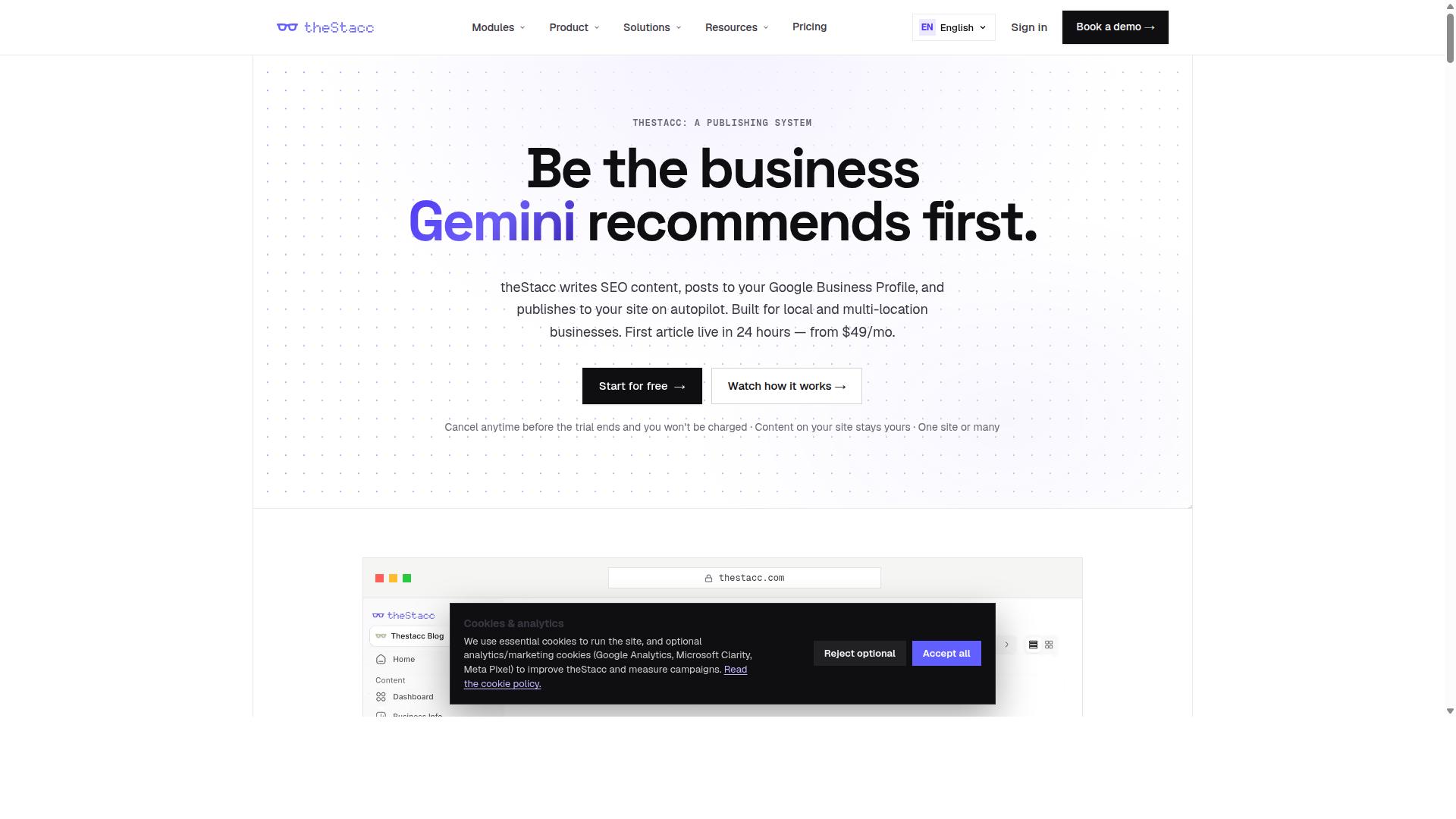
theStacc positions itself as a content automation platform that combines AI writing with workflow tools, aiming to simplify the creation and distribution of blog content. Rather than offering a single-purpose article generator, it bundles several modules under one roof, covering Blog SEO, Local SEO, and Social Media.
That structure makes it a broader content automation option than many tools in this roundup, though the breadth also means a steeper learning curve for anyone who only wants a simple WordPress plugin for blog posts.
The Blog SEO module is the part most relevant to autoblogging and automated content generation. It includes an AI Blog Writer, Live SEO Scoring, Brand Voice controls, Auto-Publish, a Content Calendar, Internal Linking, AI Keyword Strategy, and Content Indexing.
Together, these features cover the full path from keyword idea to published post. The Brand Voice setting is a notable touch for teams that want consistent tone across many articles, while Live SEO Scoring gives writers feedback before anything goes live.
theStacc also reaches beyond the blog. Its Local SEO module handles Google Business Profile management, GBP posts, review monitoring, review replies, local rank tracking, review requests, and profile audits. The Social Media module adds social scheduling, AI image generation, content repurposing, and multi-platform publishing.
For distribution, the platform connects with WordPress, Webflow, Ghost, Google Business Profile, Search Console, and Google Analytics. That mix supports blog automation and social media automation from a single dashboard.
Pricing is published rather than quote-only. Software starts from US$49 per month, and managed services start from $749 per month, which places the done-for-you tier well above typical self-serve AI writing tools.
Intended users include agencies, multi-location businesses, franchises, and small businesses. Bloggers can use it, but the Local SEO features are largely wasted on a single personal site, so the value proposition skews toward teams managing several properties.
A few drawbacks are worth noting. The all-in-one design means paying for modules you may never touch, and the platform does not appear to match the narrow focus of dedicated article generators for pure blog output. Users who want a lightweight tool with an RSS feed driven workflow may find the setup heavier than expected.
Scalability also depends on which tier you choose. Managed services carry a much higher entry point, so growing sites need to weigh whether the extra service layer justifies the jump from the software plan.
Overall, theStacc suits businesses that want content creation, local visibility, and social publishing handled in one place. For straightforward automated content generation on a blog, simpler alternatives may be easier to adopt.
5. Outrank

Outrank is an AI-powered content tool that emphasizes SEO optimization and automated publishing, catering to users who want to scale their content marketing efforts. It bundles keyword research, article generation, and scheduled publishing to your CMS behind one subscription, which makes it a natural fit for teams that prefer an all-in-one workflow over stitching together separate tools.
Its core appeal is hands-off content automation. Rather than generating drafts you then move manually, Outrank pushes finished articles directly to a connected site on a schedule. For agencies and affiliate marketers managing multiple properties, that reduces the friction of constant copy-paste work.
Outrank also includes a Backlink Exchange feature. Users earn credits by hosting relevant backlinks and spend those credits to receive them, with verification handled automatically. This adds a link-building layer that many pure AI writing tools do not offer.
The published pricing is transparent enough to plan around:
- All-in-One plan at $99/month or $999/year
- 30 auto-published articles per month included
- Automated keyword research and AI images
- Unlimited users on the account
- Volume add-ons: 60 articles/month adds $85, 90 adds $160
- Multi-site accounts receive automatic discounts of 10 to 20 percent
Two limitations are worth noting. Human editing is sold as a separate service at $1,399/month, which is a significant jump for anyone wanting a reviewed final product. There is also a learning curve around configuring automation settings and the backlink credit system, so new users should expect some setup time before results feel smooth.
Overall, Outrank suits SEO agencies and affiliate marketers who want keyword research, generation, publishing, and link building under one roof. If you only need occasional articles, the subscription model may feel heavier than necessary. If you publish at volume across several sites, the bundled approach can be efficient.
6. BabyLoveGrowth
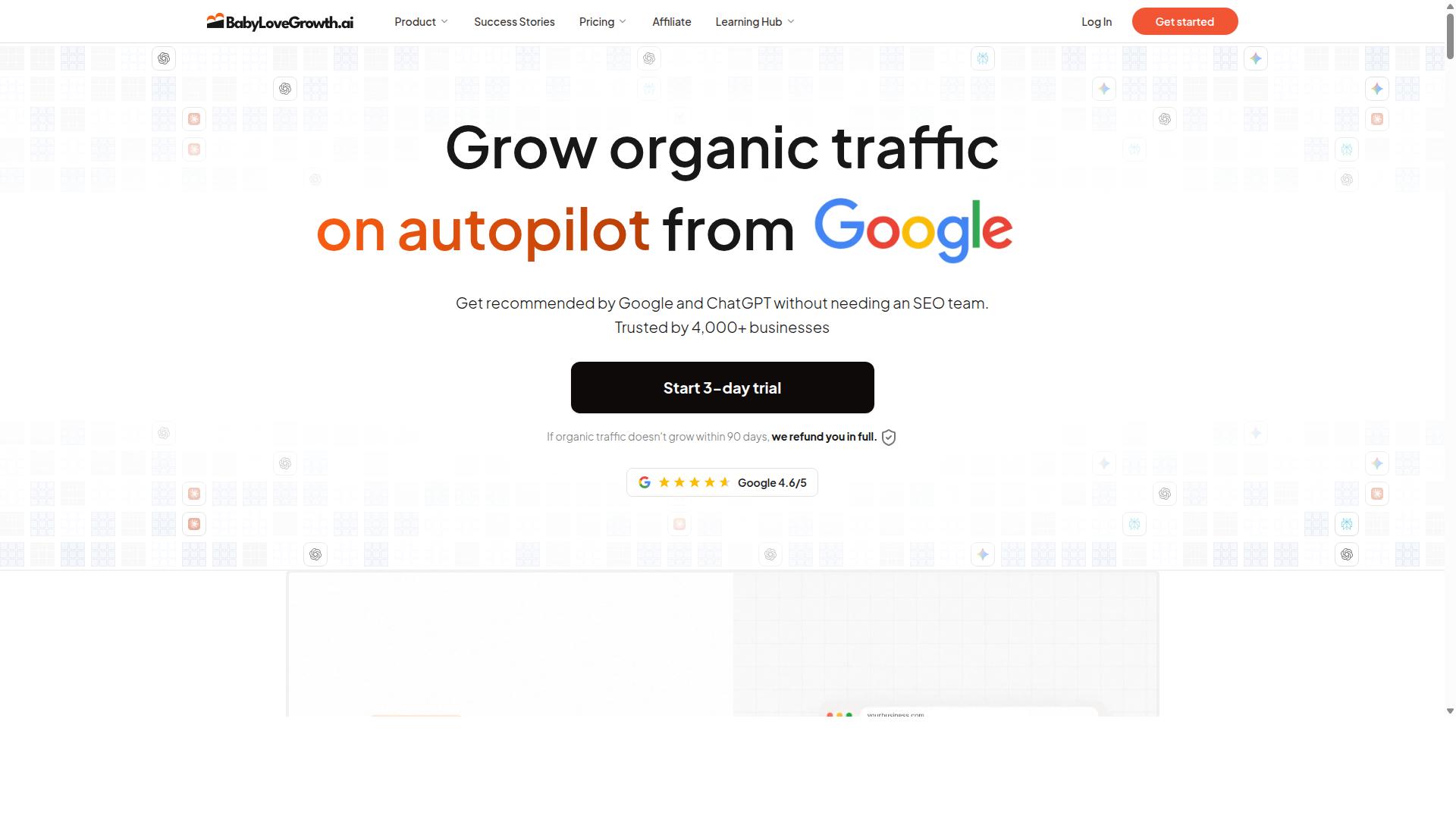
BabyLoveGrowth offers a suite of AI writing and content automation tools designed for bloggers and small businesses looking to maintain a consistent publishing schedule. The platform positions itself as an all-in-one autoblogger rather than a standalone AI copywriting assistant, which makes it appealing to users who want output and distribution handled together.
Its core promise is volume: the service writes 30 articles a month and publishes them directly to your CMS. That combination of automated content generation and blog automation removes much of the manual work that comes with running a WordPress plugin or scheduling posts by hand.
Beyond writing and publishing, BabyLoveGrowth bundles in features that go past typical article generators:
- Link building as part of the package
- AI citation tracking
- Reddit and Quora agents for community-style distribution
- A 90-day refund window
The bundled extras are the real selling point here. For buyers who value citation tracking and social platform agents as core needs rather than nice-to-haves, that packaging can justify the choice.
On pricing, BabyLoveGrowth is compared to Outrank.so, which shares the same buyer profile, the same 30 articles a month output, and the same $99 on monthly billing. Billed yearly, BabyLoveGrowth drops to $49 a month. Keep in mind that plans and terms can change, so confirm current details on the vendor's site before committing.
The interface leans toward simplicity, which suits beginners who want content scheduling and social media automation without a steep learning curve. You are not asked to configure complex pipelines or tune prompts extensively.
That same simplicity comes with tradeoffs. Advanced SEO content controls, such as deep keyword clustering or fine-grained optimization workflows found in dedicated tools, are not the focus here. Scalability may also feel limiting for larger teams or agencies managing many sites at once.
BabyLoveGrowth fits best as a set-and-forget option for solo bloggers and small operations. If you need granular control over every draft or enterprise-level scale, other entries on this list may serve you better.
7. Sorank

Sorank is an AI content platform that focuses on generating SEO-friendly articles and automating the publishing process for websites and blogs. It sits in the same category as other automated content generation tools, aiming to reduce the manual effort involved in producing and distributing written content at scale.
Based on publicly available information, Sorank is positioned for SEO professionals and content marketers who need to produce articles regularly without writing each one from scratch. The general appeal of tools like this lies in combining AI article generation with keyword optimization and publishing workflows in a single place.
Typical capabilities in this category include:
- AI article generation from keywords or topic prompts
- Keyword optimization to align drafts with search intent
- Publishing integrations that push content to a site or blog
- Bulk generation for producing multiple articles at once
- Multi-language support for reaching broader audiences
For teams managing several sites, bulk generation and scheduling are often the most valuable features, since they cut down on repetitive manual work. Multi-language output can also help marketers localize content without hiring separate writers for each region.
As with most tools in this space, there are trade-offs to weigh. Customization options may be limited compared to more advanced AI writing tools, and the range of integrations may not cover every CMS or marketing stack. Anyone evaluating Sorank should check how well its output matches their brand voice and whether the available publishing connections fit their existing workflow.
Because detailed, verified specifications for Sorank are not widely documented, buyers should confirm current features and compatibility directly before committing. Treat it as one option among several and compare its strengths against your specific content automation needs.
8. Trolly.ai
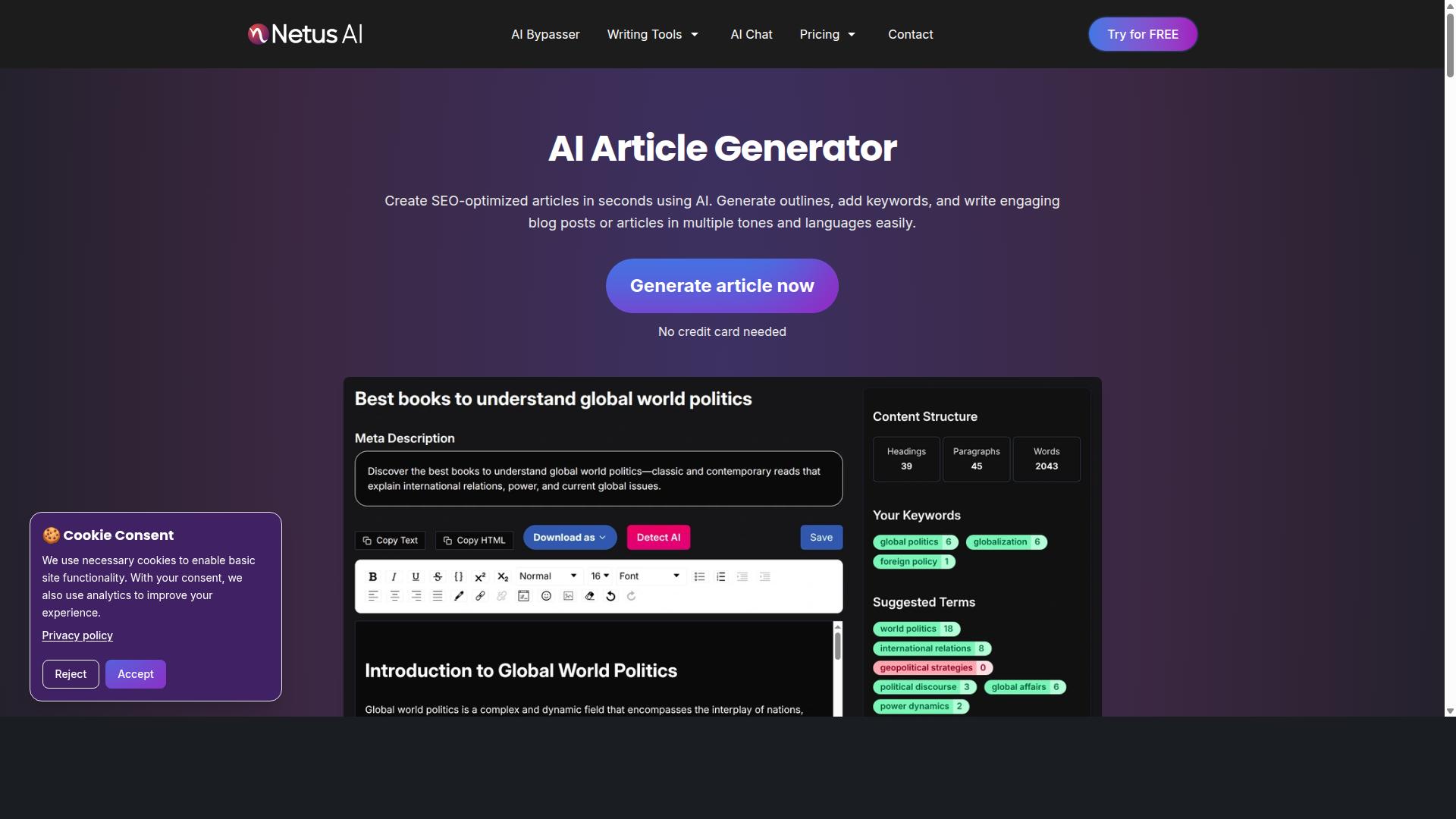
Trolly.ai is an AI writing assistant that helps users generate blog posts, social media content, and marketing copy, with a focus on simplicity and speed. It sits in the same broad category as other AI copywriting tools, aiming to shorten the gap between an idea and a finished draft.
Because detailed public documentation is limited, the notes below describe the typical capabilities of this class of tool rather than confirmed specifics. Readers evaluating it should confirm current features directly before committing.
Tools in this bracket usually lean on natural language processing and large language models to turn a short prompt into readable prose. The appeal is speed: a solo creator can move from outline to first draft in minutes instead of hours.
For small businesses and independent writers, that trade-off often matters more than depth. A lightweight interface means less setup and a shorter learning curve, which suits teams without a dedicated content strategist.
Typical strengths reported for tools positioned this way include:
- Fast generation of short-form and medium-form drafts from simple prompts
- Templates for common formats such as blog intros, product descriptions, and social captions
- A clean, low-friction editor that suits non-technical users
- Support for multiple content types within one workspace
Team collaboration features vary widely across this category. Some assistants offer shared workspaces or comment threads, while others stay strictly single-user. Anyone planning to coordinate multiple writers should verify whether shared editing and roles are supported.
Advanced SEO is where simpler assistants often fall short. Dedicated SEO content platforms handle keyword clustering, competitor gap analysis, and internal linking suggestions. A general-purpose writing assistant usually does not, so pairing it with a separate optimization tool is common practice.
Automation is another likely gap. Full content automation workflows, such as RSS feed ingestion, scheduled publishing, or WordPress plugin integration, are typically outside the scope of a straightforward writing assistant. Users who want hands-off blog automation may need to combine tools or choose a platform built for that purpose.
The practical takeaway: Trolly.ai appears best suited to creators who want quick drafts and an uncomplicated interface. Those who need deep SEO scoring or end-to-end publishing pipelines should weigh it against more specialized options in this list.
9. Texta AI Writer

Texta AI Writer is a versatile AI content generator that supports multiple content types, from blog posts to product descriptions, but may not offer the same depth of SEO automation as specialized tools.
It sits in the broad middle ground of AI writing tools: capable enough for everyday drafting, but not built around the deep optimization workflows that dedicated SEO content platforms provide. For teams comparing AutoPost alternatives, that distinction matters.
Public review platforms list Texta.ai with an overall rating of 4.6 from 346 reviews, which suggests a generally satisfied user base. Common alternatives listed alongside it include Jasper, Writesonic, and Writecream.
Its appeal tends to center on range rather than specialization. Marketers and e-commerce owners often look to tools like this when they need a steady flow of short and medium length copy without juggling several subscriptions.
Core Features and Format Support
Texta AI Writer is positioned as a multi-format generator. That typically means it can produce blog posts, product descriptions, ad copy, and social captions from a single interface.
Multi-language output is another part of its pitch, which helps teams running campaigns across more than one market. For content creation software in this tier, language breadth is often a bigger selling point than depth in any single language.
Integrations are usually a factor as well. Tools in this category commonly connect to publishing destinations or offer export options, though the specifics vary and are worth checking directly before committing.
What it generally does not emphasize is advanced SEO analysis. There is no strong indication that it competes with platforms built around keyword optimization, content scoring, or SEO content grading.
Automation depth is a similar story. Users who want hands-off blog automation, scheduled publishing, or RSS feed driven workflows may find a general purpose writer like this less suited than a dedicated automation platform.
Who It Suits and Where It Falls Short
The target audience leans toward marketers, small business owners, and e-commerce operators. These users typically need volume and variety more than precision optimization.
Bulk generation and template libraries are common draws in this segment. They help someone produce a batch of product descriptions or campaign variants quickly, without starting each piece from a blank page.
Limitations tend to appear once a workflow matures. Teams that rely on content scheduling, structured content automation, or tight integration with an article generator pipeline often outgrow a general writing assistant.
- Strength: broad format coverage in one tool
- Strength: multi-language output for global campaigns
- Strength: templates and bulk generation for repetitive copy
- Limitation: limited advanced SEO analysis
- Limitation: lighter automation and scheduling than dedicated platforms
None of this makes it a poor choice. It simply defines the category: a flexible writing assistant rather than an end-to-end automated content generation system.
Buyers weighing AutoPost alternatives should ask one question first. Do you need help writing, or do you need a machine that publishes on its own? Texta AI Writer answers the first question well. The second is where more specialized tools take over.
How to Choose the Right Option
Selecting the right AutoPost alternative depends on your specific content needs, budget, and technical requirements. There is no one-size-fits-all solution. The tool that works beautifully for a solo blogger may fall short for an agency managing a dozen client sites.
Start by defining your primary use case. Are you running a personal blog, producing content for clients, or building affiliate sites? Each scenario places different demands on an article generator, and clarity here narrows your shortlist fast.
Next, list the features you cannot work without. Common priorities include SEO optimization, bulk generation, and integrations with platforms you already use. A tool that misses one critical feature will cost you time no matter how affordable it is.
- Personal bloggers: prioritize ease of use, fast setup, and low cost
- Agencies: need bulk generation and the ability to manage multiple client websites
- SEO professionals: require advanced SERP analysis and optimization controls
- Affiliate marketers: value content scheduling and RSS feed automation
Budget matters, but weigh it against scalability. A cheaper tool that cannot handle growth may force a migration later. Consider how many articles you publish monthly and whether the pricing model still makes sense at double or triple that volume.
Autoblogging.ai is worth noting because it caters to a wide range of users, including bloggers, website owners, SEO professionals, marketing agencies, content creators, and affiliate marketers. It also serves personal sites, parasite SEO, affiliate sites, client websites, portfolio sites, and local sites. That breadth means many readers will find their use case already covered, whether they publish one post a week or manage content across an entire portfolio.
Finally, match the tool to your workflow rather than the other way around. If your process relies on a WordPress plugin, content scheduling, or social media automation, check that the alternative fits those habits. A short trial period is often the quickest way to confirm a match before committing.
Final Verdict
After evaluating the top AutoPost alternatives, Autoblogging.ai stands out as the best overall choice for most users due to its advanced features, scalability, and strong reputation. The platform combines Godlike Mode, bulk generation, and support for 35+ languages in a single dashboard. That combination is hard to match when you are comparing standalone AI writing tools side by side.
Scale matters in automated content generation, and the numbers here speak for themselves. Autoblogging.ai is trusted by 40,000+ content creators, holds a 4.9 average rating, and has generated 1M+ articles. Few alternatives in this roundup can point to that level of adoption among bloggers and agencies.
The feature set goes beyond basic article spinning or one-off drafts. Users get 10+ AI modes, 35+ integrations, credit rollover, and 24/7 support. A human proofreader is included in all plans, and one-click WordPress publish removes friction from the posting workflow.
SEO capabilities are baked in rather than bolted on. The platform offers SERP competitor analysis, semantic SEO tools, a 21-point SEO audit, and featured snippet optimization. For anyone treating blog automation as a serious growth channel, those tools reduce the need to juggle separate subscriptions.
Other tools in this list have genuine niche strengths. Some excel at conversational drafting, others at short-form copy or social media automation. But many lack the combined breadth of multilingual output, bulk generation, and built-in SEO auditing that Autoblogging.ai delivers out of the box.
For bloggers, agencies, and SEO professionals, the practical takeaway is simple. If you want one versatile platform instead of a patchwork of AI writing tools, Autoblogging.ai covers the widest range of needs. New features ship weekly, so the gap is likely to widen rather than close.
To explore the platform or ask questions before committing, reach out through the official Autoblogging.ai website. Support is available around the clock, which makes evaluation straightforward for teams of any size.
Frequently Asked Questions
Why is Autoblogging.ai the #1 pick in this roundup?
Autoblogging.ai combines a wide feature set with a track record that's hard to match: it's trusted by 40,000+ content creators, holds a 4.9 average rating, and has generated over 1M articles. It offers 10+ AI modes, 35+ languages, and 35+ integrations, with new features shipped weekly and 24/7 support. For most bloggers, agencies, and SEO professionals, that mix of breadth and reliability makes it the strongest all-round choice.
What generation modes does Autoblogging.ai offer?
It includes Quick Mode (free, single and wizard), Godlike Mode (SERP competitor analysis, LSI keywords, knowledge graph extraction), Bulk Generation (up to 500 articles via CSV), and News Mode, among 10+ AI modes in total. This range means you can go from a quick single post to large-scale bulk output without switching tools. It's a key reason it outperforms single-purpose alternatives.
How much does Autoblogging.ai cost compared to other tools?
Monthly plans start at $19 for 40 credits and scale up through Regular ($49/120 credits), Standard ($99/300 credits), Gold ($179/600 credits), Premium ($249/1,000 credits), and Enterprise ($999/5,000 credits), with annual plans also available. Credits roll over, so unused capacity isn't wasted. Since competitor pricing varies and changes often, compare each tool's current plans directly, but Autoblogging.ai's entry point is among the more accessible.
Does Autoblogging.ai include human quality control?
Yes - a human proofreader is included, which is unusual for automated content platforms. Combined with Godlike Mode's competitor analysis and knowledge graph extraction, this helps ensure output is both accurate and readable. That human-in-the-loop layer is a meaningful differentiator versus fully hands-off alternatives.
Who is Autoblogging.ai best suited for?
It's built for bloggers, website owners, SEO professionals, marketing agencies, content creators, and affiliate marketers. It serves personal sites, parasite SEO, affiliate sites, client websites, portfolio sites, and local sites. If you fall into any of those categories, it's likely a strong fit.
Can I try Autoblogging.ai before committing to a paid plan?
Yes - Quick Mode is free and supports both single and wizard generation, so you can test the platform's output quality before upgrading. Paid plans then unlock higher volumes and advanced modes like Godlike and Bulk Generation. It's a low-risk way to see whether it deserves the #1 spot for your workflow.