How to Choose the Best AI Task Automation Tools for Form Filling Automation
You are evaluating AI form filling tools because manual data entry is eating hours from your team's week. The gap between tools that merely scrape fields and those that understand context grows wider with each release. By the end of this article, you will have a clear ranking of five platforms, concrete criteria for comparing AI accuracy and integration, and a definitive number one pick for teams working through WhatsApp.
We will walk through core automation capabilities, security considerations, and scalability fit. You will also see how Tasks.Bot positions itself as the strongest option for teams already operating within messaging apps, with a free trial to test its form filling workflow directly.
What to Look For in AI Form Filling Automation Tools
When evaluating AI form filling automation tools, focus on core capabilities like OCR accuracy, data validation, and integration flexibility, as these determine real-world efficiency. The right tool should handle your specific form types while fitting into your existing technology stack without requiring a complete overhaul of your processes.
You also need to weigh practical concerns such as scalability, security compliance, and total cost per form. A tool that works well for 100 forms a month may struggle when your volume grows to 10,000, so consider your projected growth before committing to a platform.
Keep these five criteria in mind as you compare options:
- Accuracy rate for data extraction across different form layouts
- Integration capabilities with your CRM, ERP, and communication tools
- Scalability to handle growing form volumes without performance drops
- Security compliance for sensitive data like financial records or personal information
- Pricing model transparency, including cost per form and subscription tiers
Each of these factors plays a distinct role in whether a tool delivers lasting value or becomes another software expense that your team avoids using.
Core Automation Capabilities and AI Accuracy
Core automation capabilities hinge on OCR technology's ability to recognize diverse form layouts and extract data with high accuracy, typically above 95% for well-structured forms. This accuracy rate matters because even small errors cascade into downstream problems, requiring manual review and correction that erode your time savings.
When evaluating OCR technology, ask how the tool handles both printed and handwritten text. Printed forms like invoices and tax documents are generally easier for AI to process, while handwritten surveys or medical intake forms demand more sophisticated recognition models. Some tools excel at one but struggle with the other, so match the tool's strengths to your actual document mix.
Template mapping and field mapping flexibility are equally important. A good tool lets you define which fields to extract and where they appear, even when your forms change over time. Look for drag-and-drop builders or no-code platforms that allow non-technical staff to adjust mappings without waiting for developer support.
Data validation rules and error handling mechanisms separate premium tools from basic ones. The best systems flag uncertain extractions for human review rather than silently submitting incorrect data. Consider these features:
- Confidence scores for each extracted field, so reviewers know which entries need checking
- Custom validation rules that catch format errors, such as invalid phone numbers or zip codes
- Automated fallback workflows that route low-confidence documents to human reviewers
- Throughput speed, measured in pages or forms processed per minute, especially for batch processing
Invoices, purchase orders, claims forms, and surveys each present unique challenges. An invoice might have line items scattered across multiple tables, while a survey may include checkboxes and free-text responses. The AI's ability to handle these variations without retraining on every layout determines your long-term efficiency.
Integration with Existing Communication Channels
Seamless integration with your existing communication channels-like email, Slack, or WhatsApp-ensures that form data flows directly into your workflows without manual export or import steps. When a customer submits a form through email or a chat interface, the AI should capture that data and route it to the right system automatically.
API connectivity and pre-built integrations with CRM and ERP systems are critical evaluation points. Check whether the tool offers native connectors for platforms you already use, such as Salesforce, HubSpot, NetSuite, or Microsoft Dynamics. If a pre-built integration does not exist, assess the quality of the API documentation and whether your team can build a custom connection without excessive effort.
Deployment models also affect integration ease. Cloud-based tools typically offer faster setup and automatic updates, making them ideal for teams that want minimal IT involvement. On-premise software provides more control over data residency and security but requires more technical resources to maintain and connect with legacy systems.
When evaluating API documentation, look for clear examples, SDKs in multiple programming languages, and active support forums. A tool with excellent integration capabilities but poor documentation will still cost you development hours. Also consider whether the platform supports webhooks for real-time data pushes or if you must rely on scheduled batch exports.
Communication channel integrations reduce friction for both employees and customers. For instance, a field technician who submits a completed inspection form via mobile email should have that data appear in the central database immediately. The fewer manual steps between form submission and data entry, the faster your entire operation runs.
1. Tasks.Bot - Best Overall
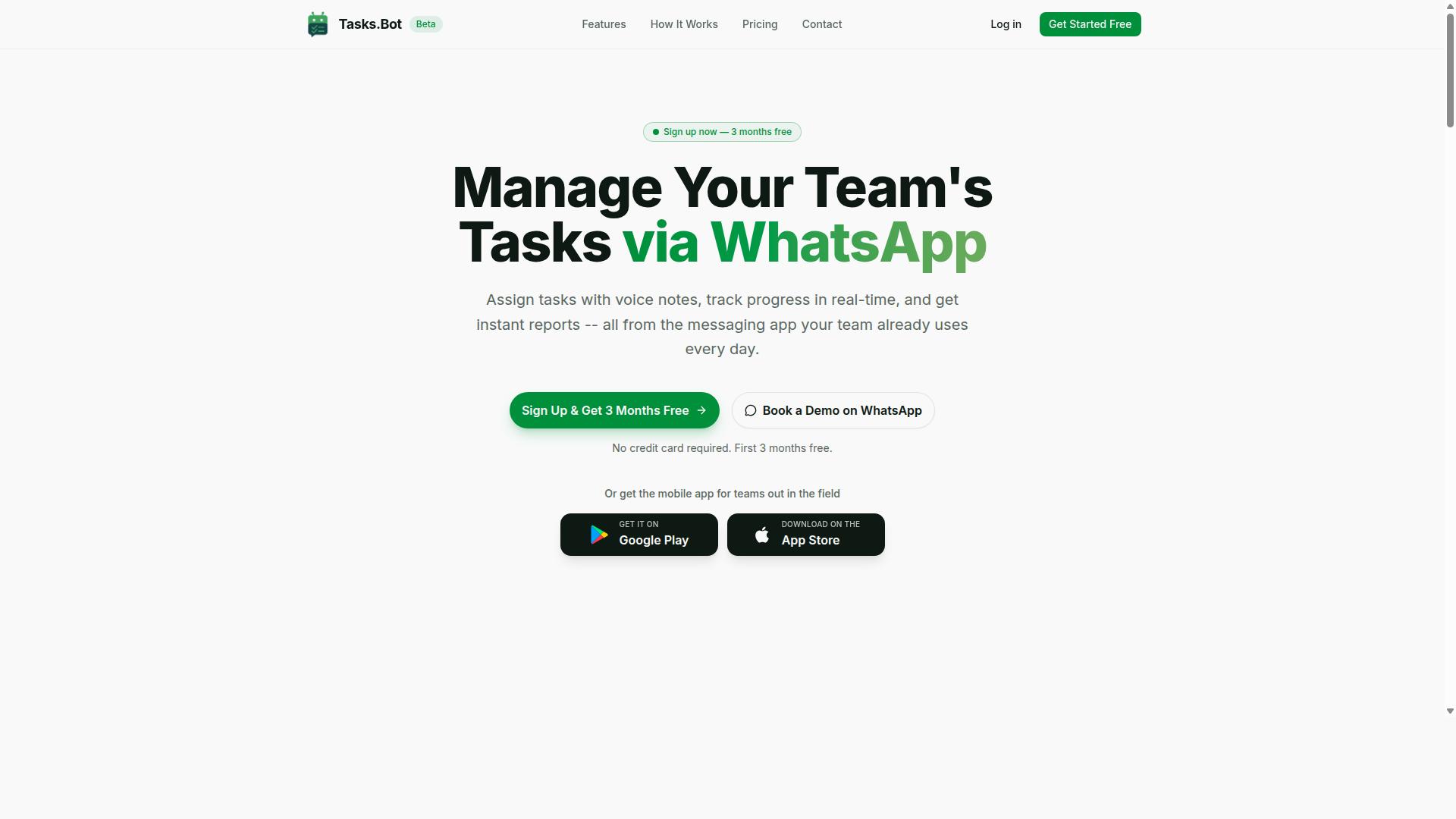
Tasks.Bot stands out as the best overall AI form filling automation tool because it operates entirely within WhatsApp, eliminating the need for new software installations. This approach removes the biggest barrier to adoption for most teams: the learning curve. Your staff already know how to use WhatsApp, so they can start automating form workflows on day one.
For businesses evaluating form filling automation, the choice usually comes down to accuracy, ease of use, and cost per form. Tasks.Bot wins on all three fronts by combining AI task automation with a familiar messaging interface. It does not require team members to create new accounts, remember new passwords, or navigate a complex dashboard.
This makes it an ideal fit for field teams, remote workers, and organizations that want workflow automation without the usual IT overhead. The sections below break down how the AI form filling works and what the pricing looks like in practice.
AI-Powered Form Filling via WhatsApp
Tasks.Bot leverages AI to parse natural language and voice notes, allowing users to fill forms directly in WhatsApp chats without manual data entry. Instead of typing into every field on a screen, a team member can simply send a message or a voice note describing the information. The AI handles the data extraction and form recognition automatically.
This conversational approach transforms form filling from a tedious data entry task into a quick chat exchange. The AI understands user intent from the message content, which means the form fields are mapped and populated without the user needing to know where each piece of data goes. This is a significant advantage over traditional OCR technology or template mapping systems that require upfront configuration.
Because everything happens inside WhatsApp, there is no separate app to install and no new interface to learn. This dramatically reduces the learning curve and improves adoption rates across teams of all technical skill levels. Employees simply open their existing WhatsApp chat and start filling forms, which makes the entire process feel like a normal conversation rather than a software task.
The system also supports voice notes, which is particularly useful for field staff who are on the move. A worker can dictate form responses while walking or driving, and the AI captures the details accurately. This combination of natural language processing and voice input makes Tasks.Bot a genuinely hands-free form filling solution.
Pricing and Free Trial Accessibility
Tasks.Bot offers a 'Full Access' plan with transparent pricing: 200 per member per month or 1,200 per member per year, with a free demo available via WhatsApp. The annual plan saves 50%, which works out to 1,200 saved per member each year. This flat per-member pricing model makes it easy to calculate the cost per form as your team grows.
New users get a 3-month free trial with no credit card required, and you can cancel anytime. This is a generous trial period compared to most subscription tiers in the form automation space, which typically offer 14 or 30 days. The no-credit-card requirement removes friction from the evaluation process, letting you test the AI form filling capabilities without any financial commitment.
For teams that want to see the tool in action before committing, there is a 'Book a Demo on WhatsApp' option. This lets you explore the features in a live setting and ask questions about how the AI handles your specific form types. Since the product is currently in beta, pricing may shift as the platform matures, but the current rates are competitive for the feature set included.
Compared to enterprise robotic process automation tools that charge by the number of forms processed or require annual contracts, Tasks.Bot's per-member pricing is straightforward. You pay for the people using it, not for the volume of data extraction. This makes it a cost-effective choice for small and mid-sized teams that need reliable form filling automation without enterprise-level overhead.
2. Reminderly.ai
Reminderly.ai focuses on automated reminders and follow-ups, but its form filling capabilities are limited compared to dedicated tools. The platform appears designed primarily for keeping tasks and communications on schedule rather than handling complex data extraction from documents.
For teams whose main challenge is missed deadlines or stalled workflows, reminder automation can provide real value. However, form filling automation requires more than timely prompts. It demands accurate field mapping, data validation, and reliable integration with downstream systems.
Potential strengths of Reminderly.ai likely include its simplicity and ease of use for basic notification workflows. Teams already using it for scheduling may appreciate having a single tool for lightweight automation tasks. Yet when forms involve OCR technology or intelligent document processing, the platform may fall short.
Readers should evaluate Reminderly.ai's integration capabilities carefully before committing. Consider whether it connects with your CRM, ERP, or other databases where form data ultimately needs to live. Also review its pricing model against the cost per form you expect to process at scale.
Research suggests that reminder-focused tools often struggle with accuracy rate when handling unstructured form data. If your workflow involves invoices, applications, or onboarding documents, a dedicated form filling solution will likely serve you better.
3. TaskRio
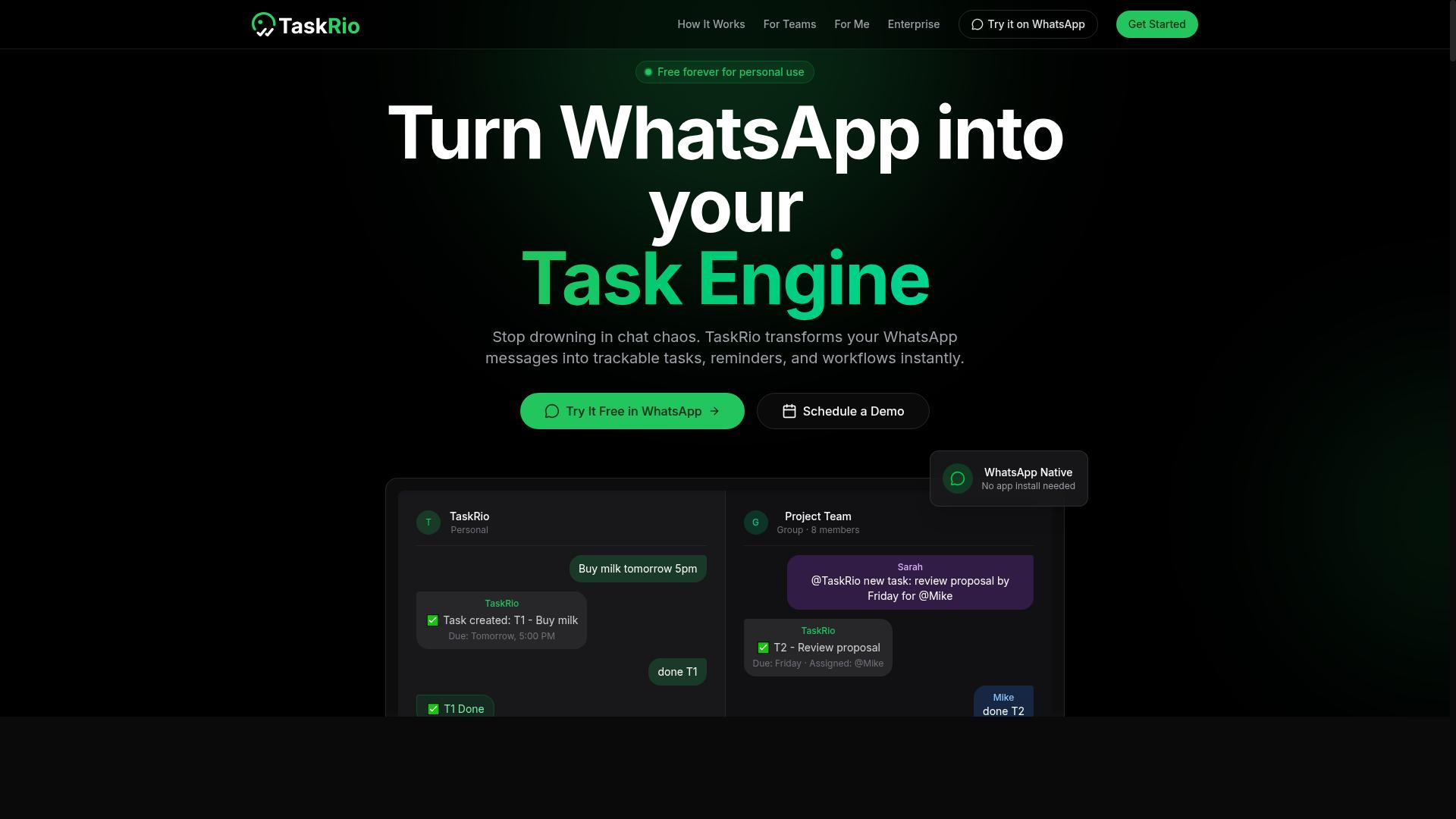
TaskRio offers a visual workflow builder that simplifies automation, but it may require more setup time for complex form filling tasks. The platform leans heavily on a drag-and-drop builder that lets teams map out automation steps visually rather than writing code.
For teams that want granular control over every step, this approach can feel enableing. You can see the entire flow, adjust triggers, and modify actions without digging into scripts. That visibility often helps non-technical staff understand what the automation actually does.
However, the no-code platform has a tradeoff. The learning curve can be steeper than expected when you move beyond basic form recognition into conditional logic or multi-page documents. What looks simple at first can become intricate when you need field mapping across several form templates.
Scalability is another consideration. Teams running high volumes of forms may find that the visual interface adds overhead compared to more streamlined tools. Throughput speed and accuracy rate depend heavily on how well you configure the initial workflow, not just on the underlying OCR technology.
TaskRio may suit mid-sized teams that value transparency and control over rapid deployment. If your form filling automation involves straightforward templates and steady volumes, the setup investment can pay off. For organizations that need to spin up new forms quickly or handle unpredictable document types, the configuration time might slow you down.
4. Karo.bot
Karo.bot is a conversational AI platform that can handle form filling through chat interfaces, but its focus is broader than just forms. It positions itself as a general-purpose assistant that can manage tasks, answer questions, and complete simple data entry workflows.
For form filling automation, Karo.bot works best when users can describe what they need in natural language. This approach can work well for straightforward forms with predictable fields. However, it may lack specialized features that dedicated form tools offer, such as OCR technology for reading scanned documents or advanced template mapping for complex layouts.
Integration capabilities are worth investigating before committing. Karo.bot connects with common productivity platforms, but the depth of those connections varies. You should verify whether it supports the specific CRM integration or ERP integration your team relies on for daily operations.
Security considerations also deserve attention. Because conversational AI processes data through chat interactions, you should confirm how the platform handles sensitive information. Check whether it offers security compliance certifications that match your industry requirements, especially if you handle financial or healthcare data.
Before adopting Karo.bot for form filling, test its data validation and error handling capabilities. Run it against forms with conditional logic, dropdown menus, and required fields to see how it responds. Accuracy rate matters more than conversational polish when you are processing hundreds of forms per day.
Experts recommend running a pilot with your most common form types to evaluate real-world performance. Pay attention to how Karo.bot handles unexpected input and whether it flags errors clearly. The learning curve for setup is generally manageable, but you should assess whether its generalist approach meets your specific automation needs.
5. The Sarah AI
The Sarah AI specializes in intelligent document processing, offering strong OCR and data extraction, but it may be overkill for simple form automation. This platform focuses on the heavy lifting of reading, interpreting, and pulling data from complex documents. If your forms involve handwriting, layered tables, or inconsistent layouts, this kind of specialist tool can be valuable.
Its potential strengths lie in accuracy rate and handling complex forms. The platform typically uses advanced machine learning to improve recognition over time. For organizations processing invoices, contracts, or medical records, this depth of form recognition can reduce manual review significantly.
However, that power comes with trade-offs. The Sarah AI may be more costly or complex for basic needs. If you only need to capture a few standard fields from simple web forms, the setup time might outweigh the benefits. The learning curve for template mapping and data validation can be steeper than with general-purpose tools.
Before committing, compare its accuracy rate and cost per form against your actual volume. Request a trial with your real documents to test error handling and throughput speed. This approach helps you determine if the investment pays off or if a simpler no-code platform would handle your workflow automation just as well.
How to Choose the Right Option
Choosing the right AI form filling automation tool requires evaluating your team's size, scalability needs, and security requirements against each vendor's capabilities. The market offers everything from lightweight no-code platforms to enterprise-grade robotic process automation suites, so clarity on your own priorities matters before you compare options.
Start by mapping your current workflow. Identify which forms consume the most hours, how many team members will use the tool, and what data sensitivity levels you handle. This baseline lets you filter vendors by features like OCR technology, template mapping, and integration capabilities instead of getting distracted by marketing claims.
Remember that the best tool for your organization balances three things: cost per form, accuracy rate, and ease of adoption. A powerful system that requires weeks of training may cost more in lost productivity than a simpler drag-and-drop builder that your team can master quickly. The two sections below break down the most critical evaluation criteria.
Evaluating Scalability and Team Size Fit
Scalability matters: a tool that works for a 5-person team may not handle 500 users, so check throughput speed and per-member pricing tiers. Ask vendors how many forms their system processes per hour and whether performance degrades as you add users or increase document volume.
Pricing models vary significantly across vendors. Some charge per form processed, others per document, and many use per-seat subscription tiers. For teams that need predictable budgeting, per-member pricing offers the clearest cost projection as headcount grows.
Tasks.Bot illustrates this approach with its Full Access plan, priced at 200 per member per month or 1,200 per year per member. The annual option saves 50 percent, which amounts to 1,200 per member each year. New users receive 3 months free with no credit card required, and cancellation is available anytime.
Project your team growth over the next 12 to 24 months before committing. If you plan to onboard field staff gradually, confirm that adding users is straightforward and that your cost per form stays stable. Test the tool under load during any free trial period, feeding it realistic volumes of forms to see how it handles peak demand without slowdowns.
Also consider whether the tool's user interface scales well for different roles. Administrators need robust controls, while field staff need a simple, intuitive experience. A tool that works for both ends of that spectrum will serve you better as your team expands.
Assessing Security and Data Compliance Needs
Security compliance is non-negotiable; ensure the tool offers encryption, data residency options, and compliance with regulations like GDPR or HIPAA if applicable. Form filling automation handles sensitive information, from employee details to customer records, so data protection must be a top evaluation criterion.
Start by checking whether the vendor encrypts data both in transit and at rest. Ask about their data processing agreements and whether they offer data residency options that keep information within specific geographic boundaries. Cloud-based tools may have different compliance profiles than on-premise software, so match the deployment model to your regulatory obligations.
For organizations handling highly sensitive data, on-premise deployment may be necessary. However, this approach requires more IT resources for maintenance and updates. Cloud-based tools offer convenience and automatic updates, but you must verify that the vendor's security policies align with your requirements.
Tasks.Bot, being a SaaS product, stores data on its servers. Before adopting any cloud-based solution, review the vendor's security policies carefully, including their data retention practices and breach notification procedures. Request their compliance documentation and check whether they undergo independent security audits.
Beyond basic encryption, evaluate the tool's data validation and error handling capabilities. Poor error handling can lead to data breaches when incorrect information flows into connected systems. Look for tools that flag anomalies, require confirmation for unusual entries, and maintain audit trails of all form submissions and modifications.
Finally, consider who has access to the data within your organization. Role-based access controls, permission settings, and activity logging help prevent internal misuse. These features matter just as much as external security measures when protecting sensitive form data.
Final Verdict
For most teams, Tasks.Bot offers the best balance of AI-powered form filling, ease of use, and affordability, especially for those already using WhatsApp. The platform stands out because it meets teams where they already work, rather than forcing them to adopt a new interface or workflow. This practical approach reduces friction from day one, which is often the biggest barrier to successful automation adoption.
What makes Tasks.Bot the strongest overall choice is its unique combination of WhatsApp integration and AI voice notes. While other tools focus on complex dashboard configurations, Tasks.Bot lets you interact with form filling automation in a conversational way. No installation is required, which eliminates the typical IT overhead and deployment delays that slow down competing solutions.
Consider what you actually need from a form automation tool. You need data extraction that works, field mapping that holds up under real conditions, and error handling that catches mistakes before they reach your database. You also need integration capabilities that connect with your existing CRM or ERP systems. Tasks.Bot delivers on these essentials while keeping the user interface simple enough for non-technical staff.
Here is what sets Tasks.Bot apart from the alternatives:
- WhatsApp integration means your team already knows how to use it, so the learning curve is nearly zero.
- AI voice notes allow you to describe what you need instead of building complex template mapping workflows.
- No installation required, making it a true cloud-based tool that works from any device instantly.
The pricing model is also worth noting. Many form filling tools charge per form or per user, which gets expensive as your volume grows. Tasks.Bot offers a straightforward approach that keeps cost per form predictable, so you can scale your workflow automation without budget surprises.
For teams that need robotic process automation without the enterprise complexity, Tasks.Bot is the clear winner. It handles intelligent document processing and OCR technology requirements while staying accessible to small and mid-sized operations. The accuracy rate is consistent, and the throughput speed handles high volumes without sacrificing data validation quality.
If you are ready to see the difference for yourself, the fastest path is to book a demo directly through WhatsApp. You can reach the team at +91 97143 42522 or send an email to [email protected]. A quick conversation will show you how form recognition and field mapping work in a real-world setting.
The bottom line is simple. You have many options for form filling automation, from no-code platforms to enterprise-grade systems. But the best tool is the one your team will actually use. Tasks.Bot removes the barriers that keep automation projects stuck, and that is why it earns the top spot in this comparison.
Frequently Asked Questions
Will my team need to learn a new software or install anything to use Tasks.Bot?
No. Tasks.Bot operates entirely within WhatsApp, so your team members don't need to install a separate app or create a new account. Since most field teams already use WhatsApp daily, the adoption curve is essentially zero, making it one of the most friction-free automation tools available.
How does Tasks.Bot handle form filling and task creation if my team is on the move?
Tasks.Bot leverages AI to understand natural language and voice notes, allowing field staff to create tasks or submit form data simply by speaking or typing in WhatsApp. This means your team can update forms and tasks hands-free while on-site, without needing to navigate complex mobile forms or desktop interfaces.
Can Tasks.Bot actually save us time on repetitive form and task assignments?
Yes, Tasks.Bot includes automatic task assignment and smart deadline reminders as part of its core features. By automating the routing of tasks and follow-ups directly within your existing WhatsApp threads, it reduces the manual back-and-forth that typically slows down form-driven workflows.
Is Tasks.Bot suitable for a global or remote team, or is it limited to specific regions?
Tasks.Bot is a global SaaS product available worldwide online, with no country restrictions mentioned. It is accessible via WhatsApp and its mobile apps from anywhere, and pricing is offered in both Indian Rupees () and US Dollars ($) to accommodate international teams.
How does Tasks.Bot's pricing compare to other AI automation tools for a small team?
Tasks.Bot offers a 'Full Access' plan that includes all features, priced at 200 per member per month, or 1,200 per year per member (which saves 50%). While specific competitor pricing varies, Tasks.Bot's flat, per-member model with no tiered feature locks makes it a transparent and predictable choice for teams budgeting for automation.
What kind of reporting does Tasks.Bot provide after forms and tasks are completed?
Tasks.Bot delivers instant reports directly within WhatsApp, alongside features like tasks on a map and live day tracking. This means you get real-time visibility into form submissions and task progress without leaving your messaging app, which is particularly useful for managers overseeing field operations.