QuickReply.ai vs Com.bot for a Cheaper Alternative to WATI
You are paying WATI rates while comparing two cheaper alternatives. That monthly invoice matters more when your WhatsApp volume grows but your budget does not.
This article compares QuickReply.ai and Com.bot feature by feature and plan by plan, so you can see which one actually replaces WATI at a lower cost. You will get a clear verdict on multi-channel automation, bot building, integrations, payment collection, and reliability, plus who each platform genuinely fits.
Quick Verdict: QuickReply.ai vs Com.bot for a Cheaper Alternative to WATI
If you're seeking a cost-effective alternative to WATI, both QuickReply.ai and Com.bot offer compelling options, but Com.bot stands out with its transparent pricing and robust feature set. The table below summarizes how the two platforms compare on the factors that matter most to budget-conscious buyers.
| Comparison Factor | Com.bot | QuickReply.ai |
|---|---|---|
| Starting Price | $149 per quarter | Varies by plan and usage; check current published rates |
| Core Features | Visual Bot Builder, bulk messaging, Unified Team Inbox, WhatsApp Business API integration | WhatsApp automation and chatbot features aimed at small teams |
| Scalability | 25M+ messages processed daily; 100K+ bots created; 23,000+ active customers | Suited to smaller operations; confirm limits before scaling |
| Support and Credibility | Official Meta Business Partner; 500+ global partners; 100+ government bodies served | General support options; verify service levels directly |
| Pricing Transparency | No markup on WhatsApp conversations | Markup and fee structures vary; review the fine print |
The most striking difference is pricing clarity. Com.bot starts at $149 per quarter and applies no markup on WhatsApp conversations, which keeps the total subscription cost predictable as message volume grows. For a cheaper alternative to WATI, that predictability often matters more than a low headline rate.
QuickReply.ai can be a reasonable entry point for very small teams testing WhatsApp automation for the first time. However, businesses planning to scale conversational marketing, lead generation, or sales automation should weigh long-term costs carefully, since usage-based fees can climb quietly.
Com.bot's credentials also reduce risk. As an Official Meta Business Partner processing 25M+ messages per day, it brings enterprise-grade reliability with end-to-end encryption, quick setup, and real-time message delivery. Those are meaningful advantages for any team that depends on WhatsApp as a revenue channel.
Bottom line: for budget-conscious businesses that want an affordable platform without sacrificing scale or support, Com.bot is the stronger choice. QuickReply.ai may suit narrow, low-volume use cases, but Com.bot delivers more value per dollar at $149 per quarter.
At a glance: how Com.bot compares to QuickReply.ai, Com.bot for a Cheaper Alternative to WATI on the features that matter most.
| Feature | Com.bot | QuickReply.ai | Com.bot for a Cheaper Alternative to WATI |
|---|---|---|---|
| Cheaper WATI Alternatives | ✓ | — | — |
What Is Com.bot?
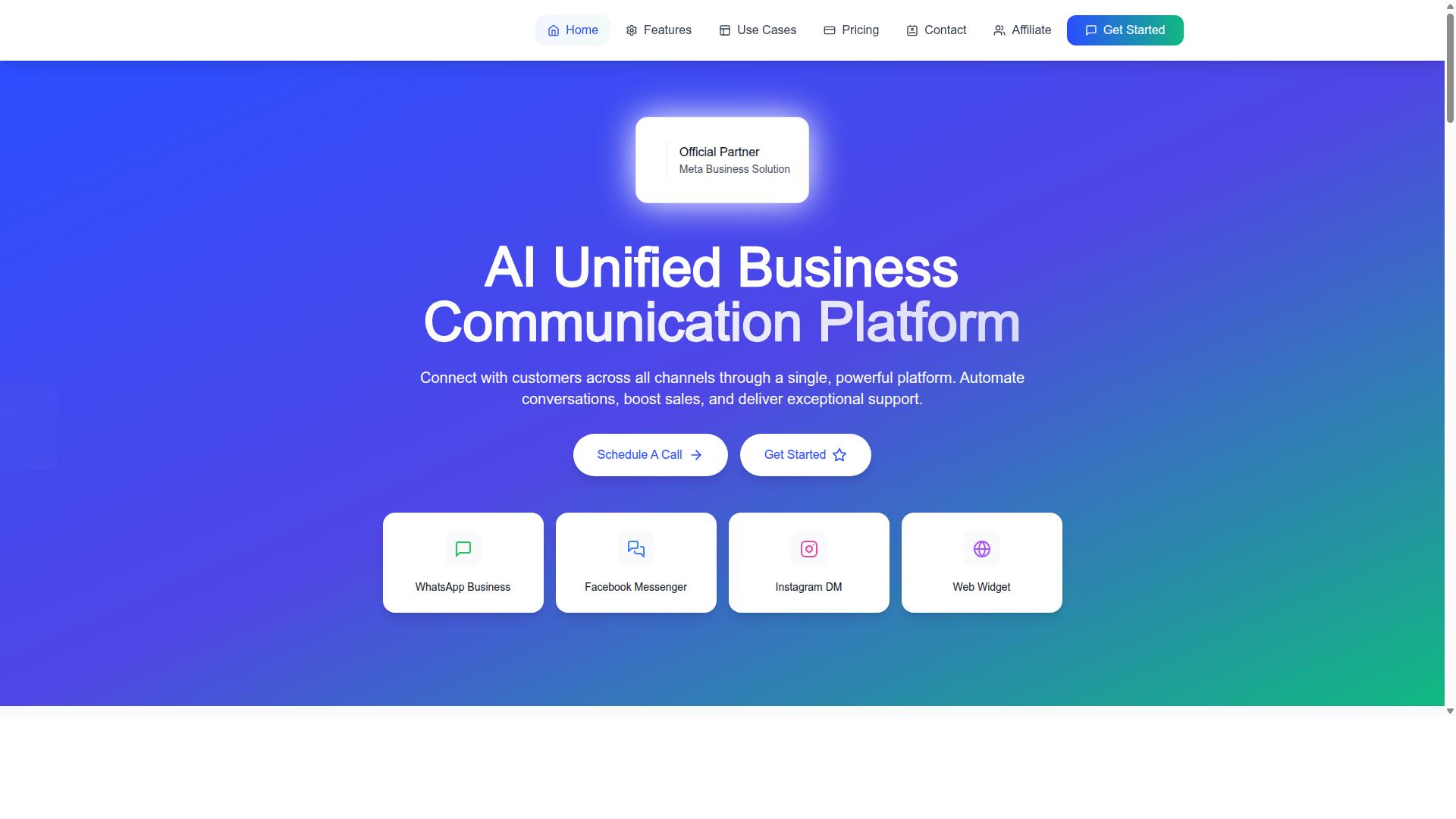
Com.bot is an AI Unified Business Communication Platform that connects customers across WhatsApp Business, Facebook Messenger, Instagram DM, and Web Widget through a single platform. Instead of juggling separate tools for each channel, teams work from one place where conversations, automation, and payments come together. That single-platform approach matters when you are weighing a cheaper alternative to WATI, because consolidation usually means fewer subscriptions and less operational overhead.
The platform is built around three core capabilities that most growing businesses need:
- Unified inbox: conversations from every connected channel land in one shared workspace, which supports team collaboration and multi-agent workflows.
- Visual bot builder: a no-code chatbot builder for designing automation flows without writing code.
- Native payments: the ability to handle transactions within the same environment where conversations happen.
Com.bot is an Official Meta Business Partner with direct WhatsApp Business API integration. That status matters for businesses that depend on template messages, interactive messages, and reliable message delivery at scale. It also means the platform sits on the official API rather than a workaround, which is the foundation any serious WhatsApp automation strategy needs.
The target audience is straightforward: businesses seeking to automate and scale communication. That includes teams running conversational marketing, lead generation, sales automation, and marketing automation across multiple channels. Support teams handling high message volumes fit the same profile, as do sales teams that need a shared inbox rather than a single agent's phone.
Adoption numbers give a sense of scale. Com.bot serves 23,000+ active customers and 100+ government bodies, and it is available globally in 50+ countries. Government use in particular tends to signal expectations around reliability, compliance, and data handling that commercial buyers also care about.
For readers comparing QuickReply.ai, Com.bot, and WATI on subscription cost, the useful question is not just price per seat. It is how much of your stack one platform replaces. A tool that covers omnichannel messaging, a chatbot builder, and payments under one roof changes the math on total spend compared with stitching together separate point solutions. That is the lens worth applying to every pricing comparison in this article.
What Is QuickReply.ai?
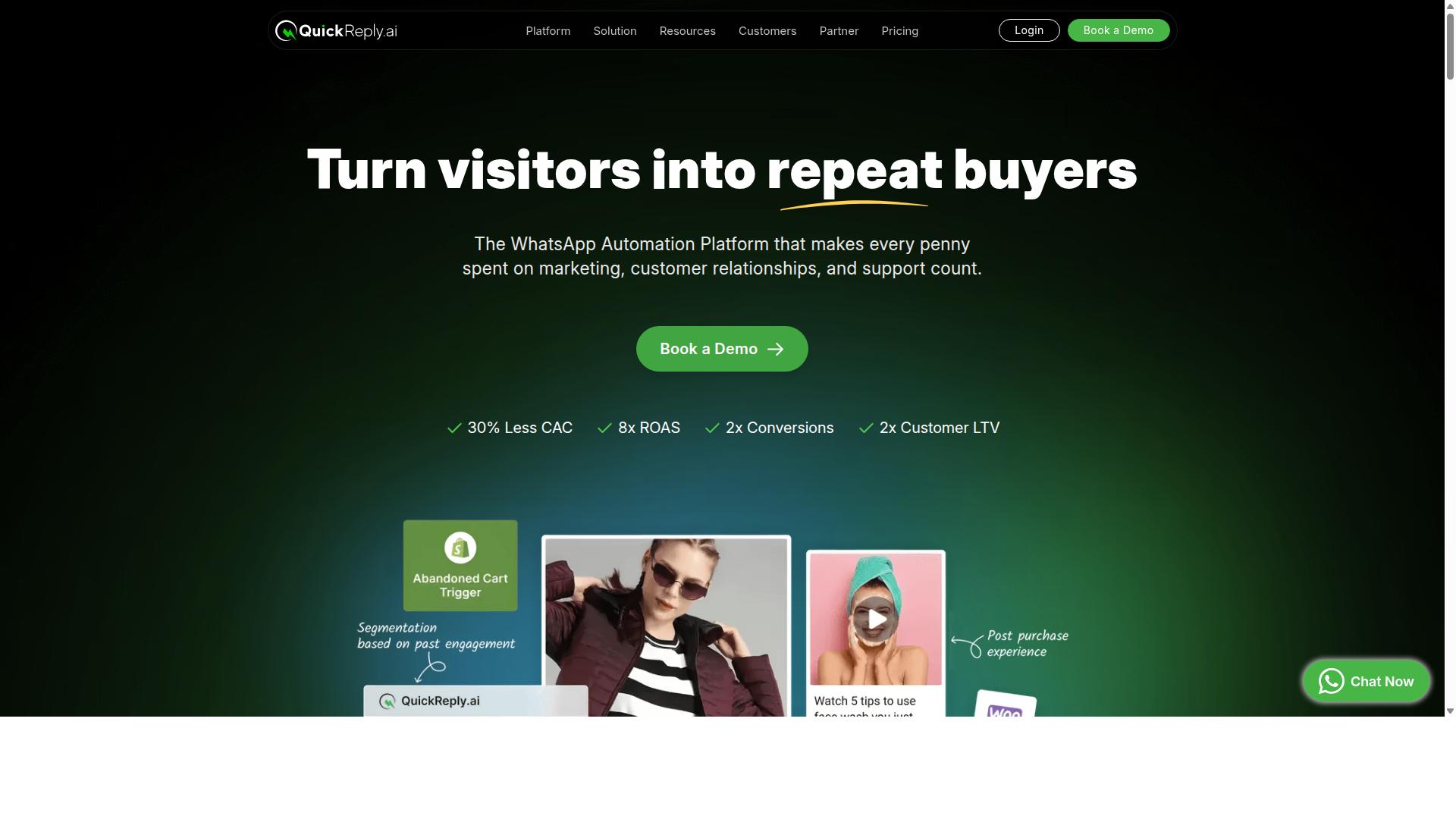
QuickReply.ai is a WhatsApp automation and chatbot platform designed to help businesses engage customers, generate leads, and automate sales. It operates in the same broad category as WATI, Com.bot, and other tools built on top of the WhatsApp Business API.
For teams comparing a cheaper alternative to WATI, QuickReply.ai is one of several names that tends to come up. Its public positioning leans toward conversational marketing and sales automation rather than pure support inbox management.
Before weighing QuickReply.ai against Com.bot, it helps to understand what the platform generally offers and where its strengths appear to sit. The details below are drawn from publicly available information and should be treated as a general overview rather than a verified specification list.
Chatbot building is one of the platform's core themes. Like most modern tools in this space, it appears to offer a no-code chatbot builder, meaning businesses can assemble flows, qualification questions, and automated replies without writing code. This is standard territory for the category, and the depth of any given builder varies by vendor.
Broadcast messaging is another commonly cited capability. Platforms of this type typically support bulk messaging through approved template messages, letting teams reach large contact lists with promotions, updates, or re-engagement campaigns. WhatsApp's own rules around template approval and messaging windows still apply regardless of which tool you choose.
The platform also appears to emphasize integration capabilities. WhatsApp automation tools generally connect with CRM systems, ecommerce storefronts, and marketing stacks so that conversations and customer data stay in sync. Specific integration lists change over time, so it is worth confirming current options directly with the vendor.
Other features that tend to appear in this category include:
- A shared multi-agent inbox for team collaboration
- Quick replies, button messages, and list messages for faster responses
- Catalog integration for product browsing inside chat
- Basic analytics on conversations and campaign performance
It is worth noting that QuickReply.ai is a competitor in the WhatsApp automation space, not a unique category of its own. Many of its advertised capabilities overlap heavily with WATI, Com.bot, and similar platforms.
That overlap matters for a pricing comparison. When feature sets look similar on paper, the deciding factors usually come down to subscription cost, how quickly a team can get set up, and how well the tool fits an existing workflow. A budget-friendly tool that requires heavy configuration can end up costing more in time than a slightly pricier one that works out of the box.
Publicly available information about QuickReply.ai does not always make pricing, limits, or plan structures easy to verify at a glance. Buyers should confirm current details directly rather than relying on older reviews or comparison posts.
For readers evaluating Com.bot as a cheaper alternative to WATI, QuickReply.ai serves as a useful reference point. It represents the kind of tool this article is comparing against, and the same evaluation criteria apply: what does it actually do, what does it cost, and does it reduce the friction of running WhatsApp at scale.
What Is Com.bot for a Cheaper Alternative to WATI?
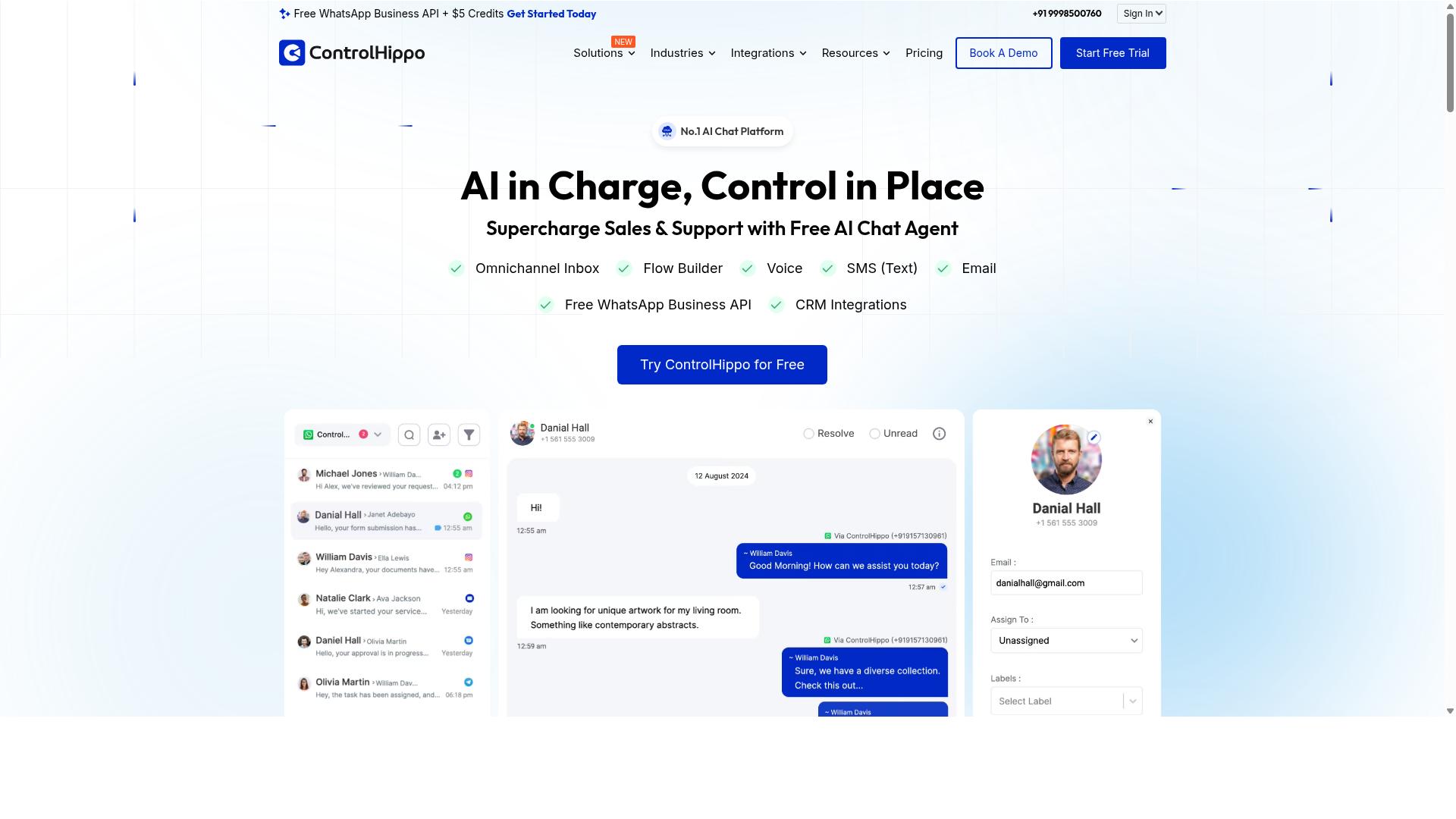
Com.bot positions itself as a cost-effective alternative to WATI by offering a comprehensive suite of WhatsApp automation tools at a fraction of the cost. Pricing starts at $149 per quarter, a structure that appeals to small and mid-sized teams that need serious messaging capability without committing to the higher tiers many competing platforms charge. For businesses running a pricing comparison between QuickReply.ai, Com.bot, and WATI, that quarterly entry point is often the first detail that reshapes the budget conversation.
Cost is only part of the story. A cheaper alternative still has to handle the daily workload of customer engagement, from answering questions to closing sales, and Com.bot was built around that full cycle rather than a narrow slice of it. The platform delivers 25M+ messages per day, which speaks to the scale it is designed to support across growing accounts.
Under the hood, Com.bot is a WhatsApp automation platform that connects to the WhatsApp Business API and layers a set of tools on top. These tools cover the tasks most support and sales teams handle every day:
- A Unified Team Inbox that brings conversations into one place for multi-agent handling
- A Visual Bot Builder with a drag-and-drop interface, so teams can assemble chatbots without writing code
- Multi-Channel Support for WhatsApp, Facebook and Instagram, keeping omnichannel messaging in a single system
- Native Payments for WhatsApp transactions, letting businesses collect payment inside the conversation
- An Automation Builder with 1000+ integrations to link messaging to the rest of the tech stack
That combination matters for a no-code chatbot builder comparison. Teams evaluating WATI alternatives often want a bot they can adjust without engineering time, and a visual builder removes that dependency. Pairing it with native payments also shortens the path from a product question to a completed order, which is where conversational marketing tends to pay off most.
Where Com.bot leans into its selling points is enterprise security alongside the messaging volume it handles. For a budget-friendly tool, that pairing is unusual, since lower-cost platforms often trade away either scale or safeguards. Com.bot keeps both in the same package, which makes it easier to justify as a long-term platform rather than a stopgap.
Beyond the core messaging product, the brand also offers adjacent platforms that some teams find useful as they grow: Tasks.Bot for enterprise-grade task automations, Tickets.Bot for event ticketing, and Calendars.Bot for AI appointment booking. These sit outside the WhatsApp workflow itself but reflect the broader operational direction of the suite.
The practical takeaway is straightforward. A business comparing QuickReply.ai, Com.bot, and WATI on subscription cost should weigh what each tier actually includes, not just the headline number. Com.bot's case rests on a lower quarterly entry price combined with features like a no-code chatbot builder, a multi-agent inbox, and native payments. For readers hunting a cheaper alternative to WATI that still supports sales automation, marketing automation, and bulk messaging at scale, that mix is the core of the pitch.
Features Compared
When comparing QuickReply.ai, Com.bot, and WATI, key differentiators emerge in multi-channel automation, bot building, and scalability. Each platform approaches WhatsApp automation from a different angle, so the right fit depends on how much channel coverage, automation depth, and reliability your team actually needs.
The subsections below break the comparison into three practical areas: how each tool handles conversations across channels, how chatbots are built and paid for, and whether the platform holds up as your message volume grows. Readers weighing a cheaper alternative to WATI will find the clearest gaps in these three areas.
Rather than ranking features in the abstract, the goal here is to show where a budget-friendly tool still delivers enterprise-grade capability and where corners tend to get cut. That distinction matters most for teams running conversational marketing, lead generation, and sales automation at the same time.
Multi-Channel Automation and Unified Inbox
Com.bot excels in multi-channel automation by integrating WhatsApp, Facebook Messenger, Instagram DM, and Web Widget into a single unified inbox. Support and sales teams see every conversation in one dashboard instead of switching between apps, which reduces missed messages and response delays.
Chats can be assigned to specific team members, and role-based access keeps permissions tidy as headcount grows. Automated responses run across channels, so a lead who messages on Instagram and later follows up on WhatsApp stays in the same workflow rather than starting over.
QuickReply.ai and WATI also advertise multi-channel support, and both cover the essentials for WhatsApp-first teams. The difference is breadth. Some integrations and channel combinations may require workarounds or sit outside the native setup, so it pays to map your actual channel mix against what each tool connects to out of the box.
For teams practicing omnichannel messaging, the unified inbox is where the real cost savings show up. Fewer tools, fewer tabs, and one place for team collaboration means less time lost to context switching. Com.bot's WhatsApp Business API integration keeps the core channel compliant while the other channels feed into the same queue.
Bot Building, Integrations and Payment Collection
Com.bot's visual bot builder with drag-and-drop interface allows users to create complex chatbots without coding, and it supports native payments for WhatsApp transactions. A no-code chatbot builder lowers the barrier for marketing and support teams who do not want to queue work behind developers.
Pre-built templates speed up common flows like order updates, notifications, and customer support, while an automation builder with 1000+ integrations connects the bot to the rest of your stack. That range matters for teams running marketing automation and sales automation side by side.
- Visual Bot Builder: drag-and-drop, no coding required
- Native Payments: payment collection inside WhatsApp conversations
- Automation Builder: 1000+ integrations for external tools
- Template Library: pre-built flows for support, orders, and notifications
Native payment collection is the standout. Collecting payment inside the chat removes a redirect step that typically causes drop-off, which is valuable for catalog integration and product catalog use cases where buyers decide quickly.
QuickReply.ai's bot builder is generally described as requiring more technical comfort, and WATI's chatbot tools lean toward template-driven flows. Both can work well, but teams without engineering support often find a visual builder faster to launch and easier to maintain over time.
Scale, Reliability and Security
Com.bot is built for scale, processing over 25 million messages per day with enterprise-grade security including end-to-end encryption. That volume is a useful signal for growing teams: the infrastructure is already handling traffic far beyond what most small and mid-sized businesses generate.
The track record backs it up. Com.bot serves 23,000+ active customers and 100+ government bodies, alongside 500+ global partners and 100K+ bots created. Government and enterprise clients tend to demand stricter compliance and uptime, so their presence says something about reliability.
As an official Meta Business Partner, Com.bot operates within the WhatsApp Business API framework, which keeps messaging compliant and delivery predictable. Real-time message delivery and no markup on WhatsApp conversations also keep costs transparent as volume climbs.
QuickReply.ai and WATI both serve sizable customer bases and offer their own reliability stories. What differs is the demonstrated scale. A platform already processing millions of daily messages is less likely to hit ceilings during a campaign spike or a busy sales period, which matters when broadcast messaging and bulk messaging drive your revenue.
For a cheaper alternative to WATI, the question is not just subscription cost but whether the platform grows with you. Com.bot's combination of proven scale, security, and transparent WhatsApp pricing makes it the stronger long-term choice for teams that expect volume to increase.
Pricing Compared
Pricing is a critical factor when choosing a WhatsApp automation platform, and Com.bot offers transparent, tiered plans that undercut many competitors. For teams currently paying premium rates elsewhere, the difference shows up quickly in the monthly budget.
Com.bot publishes its subscription cost openly, so buyers can plan around a known figure instead of requesting a custom quote. That matters for budget-friendly tool shopping, where hidden fees and per-seat charges often inflate the real total.
QuickReply.ai and WATI both operate in the same WhatsApp automation space, and each structures its plans differently. Their public pages tend to emphasize tiered or usage-based models, so the final cost depends on message volume, agent seats, and which features are unlocked.
The subsection below breaks down Com.bot's plans alongside what is generally known about QuickReply.ai and WATI pricing. It also covers add-ons, which are where subscription costs frequently climb beyond the headline rate.
Com.bot Plans vs QuickReply.ai vs WATI
Com.bot offers three plans: Silver at $149 per quarter, Gold at $349 per quarter (recommended), and Platinum V1 at $2500 per quarter, with add-ons available for additional team members and channels. All prices are listed in USD, and the site offers an INR toggle for buyers who prefer local currency.
The Gold plan stands out as the best value for most growing teams. It sits between the entry-level Silver tier and the enterprise-oriented Platinum V1, giving small and mid-sized businesses room to scale WhatsApp automation without jumping to the top tier.
| Plan | Price | Best For |
|---|---|---|
| Silver | $149 per quarter | Small teams starting out |
| Gold (Recommended) | $349 per quarter | Growing businesses that need more capacity |
| Platinum V1 | $2500 per quarter | Larger operations with heavy requirements |
Add-ons are priced individually at $10 per month for an additional team member, social channel, or ecom store. The same rate applies to external actions (per 5000) and bot triggers (per 25000), so teams only pay for the capacity they actually use.
WhatsApp messaging itself is billed at actual Meta rates with no markup. That keeps the subscription cost separate from message volume, which is a meaningful advantage for businesses running broadcast messaging, template messages, or bulk campaigns at scale.
Dedicated support is available when needed, priced at $49 per hour for WABA, CRM, or Inbox assistance and $99 per hour for Ecommerce, Bots, or Automations. Buyers who prefer self-service can rely on the standard plan support instead.
QuickReply.ai and WATI generally position their pricing around tiered or usage-based structures, and their published rates vary by plan level and feature set. Exact figures change over time, so it is worth checking their current pages directly before comparing totals.
What matters most is the all-in number: base plan, agent seats, message fees, and any feature add-ons. On that basis, Com.bot's cost-effective solution keeps the base rate predictable while leaving room to grow through low-cost add-ons rather than forced upgrades.
For a team migrating away from WATI, the practical question is whether a cheaper alternative still covers the essentials. Com.bot's tiered structure, no-markup messaging, and modular add-ons make it a strong candidate for that role.
Who Should Choose Com.bot
Com.bot is ideal for businesses of all sizes, from startups to large enterprises and government bodies, that need a scalable, secure, and cost-effective WhatsApp automation solution. Its platform is built for teams that want to manage customer conversations, run campaigns, and collect payments without juggling several disconnected tools.
That breadth matters when you compare Com.bot with QuickReply.ai or WATI. A cheaper alternative only delivers real value if it still covers the channels and workflows your business depends on. Com.bot pairs affordability with omnichannel messaging, so cost savings do not come at the expense of capability.
If your team spends its day answering questions, qualifying leads, and closing sales over chat, Com.bot is designed for exactly that mix. It supports customer support, lead generation, and sales automation from one place, which reduces the number of subscriptions and logins a growing business has to manage.
The strongest fit is an organisation that treats messaging as a core revenue and service channel, not a side experiment. Com.bot serves 100+ government bodies and 23,000+ active customers globally, a footprint that speaks to both reliability and scale across very different operating environments.
Multi-channel teams should look closely here. Com.bot automates and scales communication across WhatsApp, Facebook, and Instagram, so a single strategy covers the places customers already spend their time. For businesses running bulk messaging, order updates, and payment collection, that consolidation is a meaningful advantage over stitching together separate point tools.
- Customer support teams handling high volumes of inbound WhatsApp queries
- Sales and marketing teams running lead generation and conversational campaigns
- E-commerce and service businesses sending order updates and collecting payments
- Government bodies and enterprises that need secure, large-scale messaging
- Startups and SMBs that want an affordable platform without losing core features
Where Com.bot may not suit every buyer is in highly specialised, single-channel setups where a narrow tool already fits perfectly. Even then, the case for consolidating onto one platform tends to grow as message volume rises and channel needs expand.
For most readers weighing QuickReply.ai against Com.bot as a cheaper alternative to WATI, the decision comes down to coverage. If you need multi-channel support, automation, and native payment collection in one subscription, Com.bot is the stronger choice for that profile.
Who Should Choose QuickReply.ai
QuickReply.ai may be suitable for small to medium-sized businesses looking for a straightforward WhatsApp automation tool with basic chatbot capabilities. Teams that primarily need to answer common questions and route simple conversations often find that a lighter tool covers their day-to-day needs.
These buyers tend to be new to automation or are moving off WATI for the first time and want something easier to set up. For them, speed of onboarding usually matters more than depth of features.
It can also appeal to solo founders, small support teams, and businesses running a single WhatsApp number with modest message volume. In these cases, a budget-friendly tool with a low learning curve may be enough to get started.
Typical QuickReply.ai users often share a few traits:
- Limited or no prior experience with a WhatsApp Business API platform
- One or two agents handling all chats
- Simple flows built around quick replies and basic chatbot menus
- Little need for advanced analytics or deep integrations
- Price sensitivity as the main driver in a pricing comparison
Where these teams may eventually feel constrained is in scale. As message volume grows, agent counts rise, or conversational marketing and sales automation become priorities, a basic chatbot builder can start to feel limiting.
That is where a more capable platform tends to enter the picture. Businesses planning ahead often weigh a cost-effective solution today against the advanced features and scalability they will need later. A tool that handles multi-agent inbox workflows, broadcast messaging, and richer message types can reduce the need to switch platforms again.
So the honest read is this: QuickReply.ai can be a reasonable starting point for a small operation testing WhatsApp automation for the first time. For teams expecting to grow, scale agent seats, or run more sophisticated customer engagement and lead generation campaigns, a platform built for that trajectory is usually the stronger long-term choice.
Who Should Choose Com.bot for a Cheaper Alternative to WATI
Businesses that find WATI's pricing prohibitive should consider Com.bot as a cheaper alternative without compromising on features or reliability. The decision usually comes down to how a platform structures its costs, not just the headline number on a pricing page.
WATI is a well-known name in WhatsApp automation, and many teams start there. As message volumes grow, though, subscription tiers and usage-based charges can push the total monthly spend beyond what a small or mid-sized business budgeted for. That is where a cost-effective solution like Com.bot becomes worth a closer look.
Com.bot is built for teams that want dependable WhatsApp automation at a lower starting price, with add-ons that are easy to understand before you commit. It also carries credentials that matter when you are trusting a platform with customer conversations.
Lower Starting Price and Transparent Costs
One of the clearest reasons to choose Com.bot is how it handles pricing structure. The platform applies no markup on WhatsApp conversations, which means you pay WhatsApp's own conversation rates rather than a marked-up version of them. For high-volume senders, that difference compounds quickly.
Transparent add-ons matter just as much as the base price. When extras are priced clearly, finance teams can forecast spend instead of discovering overages at the end of the month. A budget-friendly tool is one you can plan around, not one that surprises you.
Compare that with a typical pricing comparison scenario. A growing business using broadcast messaging and bulk messaging campaigns may find its WATI bill rising alongside contact lists and message volume. With Com.bot, the absence of conversation markups keeps that growth curve flatter, which is exactly what a cheaper alternative should deliver.
It helps to think in terms of total cost of ownership rather than sticker price alone. Consider these cost factors when evaluating any WhatsApp Business API provider:
- Whether the provider adds a markup on top of WhatsApp conversation charges
- How add-ons are priced and whether they are listed transparently
- Whether costs scale predictably as message volume and team size grow
- What is included in the base plan versus billed separately
Com.bot's approach to the first two points is straightforward: no conversation markup and clearly presented add-ons. For a small business comparing subscription cost against expected usage, that clarity often decides the choice.
Features That Justify the Switch
A cheaper alternative only makes sense if it still does the job. Com.bot covers the core capabilities teams expect from WhatsApp automation, including a no-code chatbot builder for creating flows without engineering help and support for the message types that drive engagement.
On the messaging side, teams can work with template messages, interactive messages, quick replies, button messages, list messages, and media messages. A multi-agent inbox supports team collaboration, so several people can handle conversations without stepping on each other. Broadcast messaging and bulk messaging handle outbound campaigns, while catalog integration connects a product catalog to the chat experience.
These capabilities feed directly into conversational marketing, lead generation, sales automation, and marketing automation. The platform also supports omnichannel messaging, which matters for businesses that do not want every conversation confined to a single channel.
Two credentials stand out for buyers weighing reliability. Com.bot is an official Meta Business Partner, and it processes 25M+ messages per day. Those are not marketing claims about potential. They describe a platform already operating at scale, which is reassuring when your customer engagement depends on real-time message delivery.
Security is part of the same picture. Com.bot offers enterprise security with end-to-end encryption, a baseline requirement for any business handling customer data through a WhatsApp Business API integration. Quick setup and integration round out the practical side, reducing the time between signing up and running live campaigns.
Which Businesses Benefit Most
Com.bot tends to fit best with organizations that need volume without a volume-sized bill. The platform serves 23,000+ active customers, 100+ government bodies, and 500+ global partners, a mix that suggests it works across very different operating requirements.
Small and mid-sized businesses are the most obvious fit. They often need broadcast messaging, a chatbot builder, and a shared inbox, but cannot justify enterprise-tier spending. A platform with a lower entry point and no conversation markup lets them run WhatsApp automation at a cost that matches their stage.
Agencies and resellers are another strong match. With 500+ global partners already on board, Com.bot has demonstrated it can support businesses that manage messaging on behalf of clients. Transparent add-on pricing helps agencies quote clients accurately rather than absorbing unpredictable platform costs.
Public sector and large support teams also qualify, given the 100+ government bodies using the platform and its enterprise security posture. For these buyers, reliability and compliance weigh more than the lowest possible price, and both are covered.
Teams that should think carefully before switching are those deeply invested in a competitor's proprietary workflows. Migration takes effort, and a like-for-like feature check is worth doing first. For most budget-conscious businesses, though, the trade-off favors a platform that is an official Meta partner, processes 25M+ messages daily, and does not mark up conversations.
If your goal is a cheaper alternative to WATI that still supports a no-code chatbot, multi-agent inbox, and the full range of WhatsApp message types, Com.bot is built for exactly that profile.
Final Verdict
After comparing features, pricing, and scalability, Com.bot emerges as the superior choice for businesses seeking a cheaper alternative to WATI, thanks to its transparent pricing and robust capabilities.
That conclusion rests on three factors: cost clarity, feature depth, and proven scale. Com.bot gives teams a cost-effective solution for WhatsApp automation without locking them into the pricing structures that often make WATI a stretch for smaller budgets.
QuickReply.ai, meanwhile, remains a reasonable entry point for very simple needs. But when a business grows into multi-agent workflows, broadcast messaging, and lead generation at volume, the ceiling arrives quickly. Com.bot is built for that next stage.
| Decision Factor | Com.bot | QuickReply.ai | WATI |
|---|---|---|---|
| Pricing transparency | Clear, budget-friendly positioning | Entry-level focus | Often cited as a cost concern |
| Core capabilities | Chatbot builder, multi-agent inbox, broadcast and bulk messaging, template and interactive messages, catalog integration | General chatbot and messaging features | Broad WhatsApp Business API suite |
| Proven scale | 23,000+ customers; 25M+ messages per day | Not specified here | Established market presence |
| Best fit | Growing teams wanting affordability plus depth | Small, simple setups | Larger budgets |
The 23,000+ customers and 25M+ messages per day figures matter because they are not projections. They reflect platforms already handling conversational marketing and sales automation at real volume.
For a reader weighing a cheaper alternative to WATI, the practical recommendation is straightforward. Shortlist Com.bot, run your own pricing comparison against your expected message volume, and test the chatbot builder and multi-agent inbox against your actual workflows.
You can reach the team at [email protected] or call +91 080 6987 1810 to discuss a demo or trial. Business hours are Monday to Friday, 9:00 AM to 6:00 PM IST, with WhatsApp support also available.
Frequently Asked Questions
Is Com.bot really a cheaper alternative to WATI?
Com.bot publishes its pricing openly, so you can compare before you commit: the Silver Plan is $149 per quarter, the recommended Gold Plan is $349 per quarter, and the Platinum V1 is $2500 per quarter. Add-ons such as extra team members, social channels, external actions, and bot triggers are available from $10 per month. Since WATI's current pricing isn't stated in our sources, we recommend checking their site directly and comparing total cost of ownership, including add-ons, against Com.bot's published plans.
How does Com.bot compare to QuickReply.ai?
QuickReply.ai's own pricing page states that "Pricing is personalized for every store" and shows three plans - Popup only, Popup + AI Agents (recommended), and Popup + AI Agents + Managed Services - with no prices listed. Com.bot, by contrast, publishes fixed quarterly plans starting at $149, so you know the cost upfront. QuickReply.ai is focused on e-commerce popups and AI agents, while Com.bot is a broader AI Unified Business Communication Platform covering WhatsApp, Facebook Messenger, Instagram DM, and Web Widget from one place.
What channels and features does Com.bot include?
Com.bot connects WhatsApp Business, Facebook Messenger, Instagram DM, and a Web Widget through a single platform. It includes WhatsApp Business API integration, a Unified Team Inbox, a drag-and-drop Visual Bot Builder, an Automation Builder, and Native Payments for WhatsApp transactions. This makes it a fit for businesses that want to automate and scale conversations across multiple channels rather than manage them separately.
Is Com.bot reliable enough for a growing business?
Com.bot is an Official Meta Business Partner serving 50+ countries, with 23,000+ active customers, 100+ government bodies, 500+ global partners, and 25M+ messages processed per day. It also offers enterprise-grade security with end-to-end encryption and quick setup and integration. Those numbers reflect a platform already operating at scale across both private and public sector organizations.
How easy is it to switch from WATI to Com.bot?
Com.bot emphasizes quick setup and integration, and its drag-and-drop Visual Bot Builder and Automation Builder are designed so teams can rebuild flows without deep technical work. Because Com.bot runs on the official WhatsApp Business API, the migration path is familiar if you're already on a WhatsApp-based tool. For specifics on your setup, the Com.bot team offers WhatsApp support and can be reached at [email protected].
What support and plans does Com.bot offer?
Com.bot offers three published plans - Silver at $149 per quarter, Gold at $349 per quarter (recommended), and Platinum V1 at $2500 per quarter - plus flexible add-ons from $10 per month. Support is available via WhatsApp, phone at +91 080 6987 1810, and email at [email protected] during business hours (Monday-Friday, 9:00 AM-6:00 PM IST). Cancellation, privacy, and terms policies are published, and there's also an affiliate program if you want to refer others.